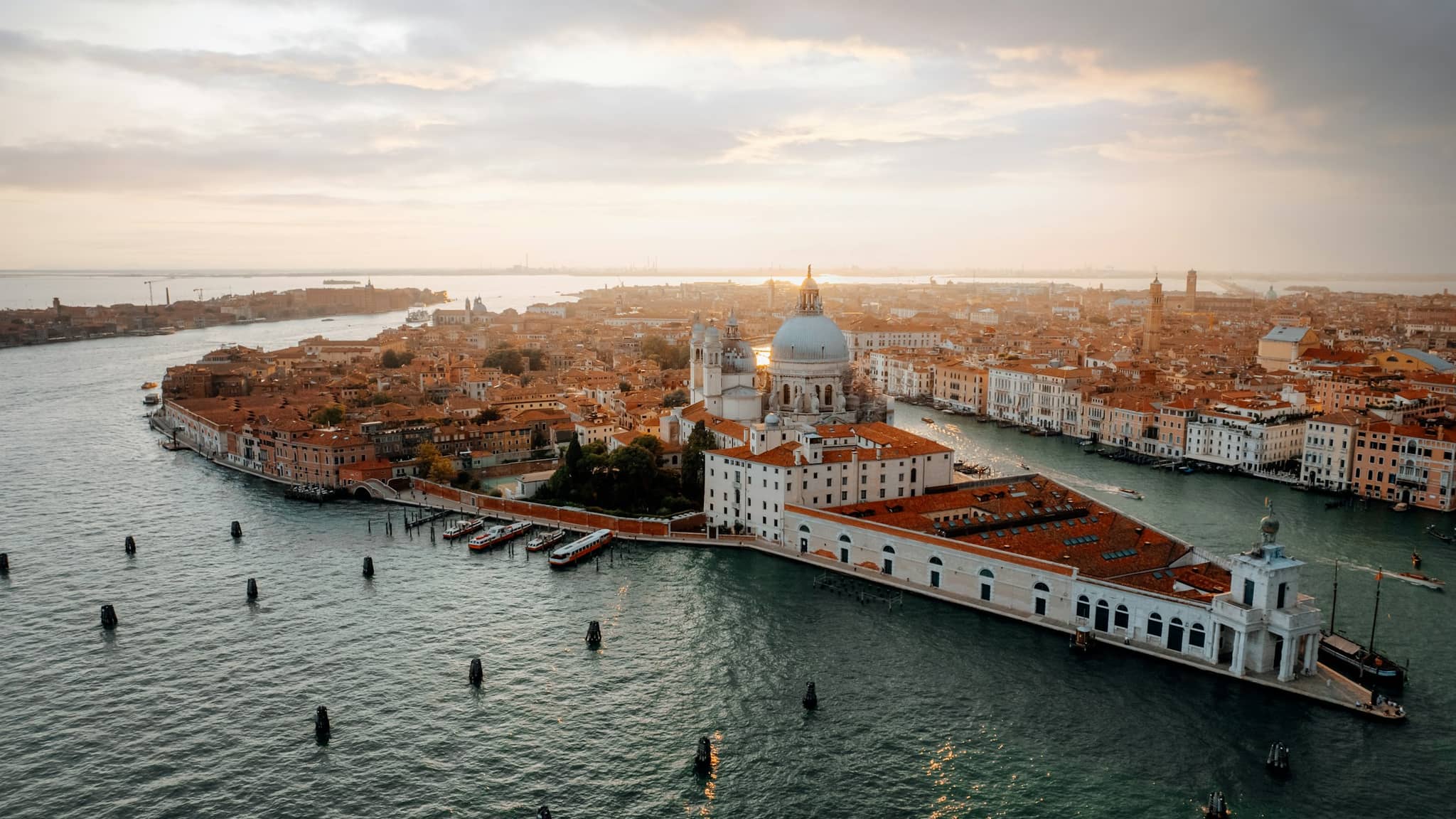
The vaporetto is the Venetian water bus, the city’s public transport, and the only motorised way to move around the historic centre. Run by ACTV, the municipal transport company, the network covers the lagoon between Punta Sabbioni at the eastern barrier islands and the mainland edges of Marghera, with most travellers using only the half-dozen central lines through the Grand Canal and across to the islands. This guide is a hosts’ read on the network: which lines to learn, which tickets to buy, when the vaporetto is worth it and when you should walk instead.
The short answer
A 72-hour pass (€45) is the right ticket for a 3-night Venice trip. Memorise three lines: 1 (slow Grand Canal), 2 (fast Grand Canal), and 12 (the islands of Murano and Burano). Walk inside a sestiere; take the vaporetto between sestieri or to an island. Night service runs on the N line until 04:30. Validate with contactless or the paper ticket against the orange reader at the dock.
A single ticket costs €9.50 and is valid for 75 minutes. Two single journeys is €19, which is closer to a day pass (€25). If you expect to make more than two journeys in 24 hours, buy the pass.
How the network works
ACTV runs roughly 30 vaporetto lines numbered by their itinerary. Most travellers use only five.
Line 1. The slow Grand Canal service. Every stop between Piazzale Roma at the western edge and the Lido at the eastern edge, including the major Grand Canal stops (Ferrovia, San Marcuola, Ca’ d’Oro, Rialto, San Tomà, San Samuele, Accademia, Salute, San Marco Vallaresso, San Zaccaria) and the eastern Castello stops (Arsenale, Giardini-Biennale). The full Piazzale Roma to Lido takes 60 minutes. Runs every 10 minutes through the day, every 20 in the early morning and evening.
Line 2. The express Grand Canal service plus a Giudecca loop. Fewer stops than line 1: Piazzale Roma, Ferrovia, Rialto, San Tomà, San Samuele, Accademia, San Marco Giardinetti, San Zaccaria, then around to Giudecca (Zitelle, Redentore, Palanca) and back. Faster than line 1 for the Piazzale Roma to San Marco run (25 minutes vs 45). Runs every 10 to 12 minutes.
Lines 4.1 and 4.2. The Murano loop, anticlockwise and clockwise. From San Zaccaria they run via the Arsenale, the eastern lagoon stops, Murano, and back via Fondamente Nove. Useful for travellers staying in eastern Castello who want a direct line to Murano without going via Fondamente Nove. Every 20 minutes.
Lines 5.1 and 5.2. The long city loop including the Lido. From Lido around the eastern half of the city, through Fondamente Nove and the Cannaregio canal, to Piazzale Roma, and back via the Giudecca canal. The line tourists use for the Lido summer beach day. Every 20 minutes.
Line 12. From Fondamente Nove (the northern Venetian quayside) to Murano Faro, Mazzorbo, Burano, and Treporti, with seasonal extensions to Torcello. The only direct line for the Burano half-day excursion. Every 30 minutes; 45 minutes to Burano.
Line N (notturno). Night service through the Grand Canal between Lido and Piazzale Roma, every 30 minutes from 23:30 to 04:30. Covers the gap when the daytime lines stop running.
The full official list is on the AVM Venezia public-transport portal.
Tickets and passes, 2026
The 2026 fare structure, in current euro:
| Ticket type | Cost | Validity |
|---|---|---|
| Single | €9.50 | 75 min, one direction including transfers |
| 24-hour pass | €25 | All ACTV (vaporetto, bus, People Mover) |
| 48-hour pass | €35 | All ACTV |
| 72-hour pass | €45 | All ACTV |
| 7-day pass | €65 | All ACTV |
| Child 0–5 | Free | Unaccompanied minors not permitted |
Single ticket at €9.50 is good for 75 minutes from the validation tap. You can transfer to another line as long as the new validation is within the 75-minute window. Two journeys per day means €19 per person. By the time you do three you have paid more than the 24-hour pass.
Multi-day passes activate on the first validation, not at purchase. Buy in advance without losing time. The 72-hour pass at €45 is the standard for a 3-night trip and pays for itself by Day 2 if you use the vaporetto for arrival, departure, and one island day. The 7-day pass at €65 is the right buy for any stay of 5 or more nights.
Rolling Venice Card. For travellers aged 6 to 29, a €6 add-on card reduces the 72-hour pass from €45 to €27. A €24 saving. Buy at any ACTV office with photo ID.
Contactless payment. Since 2024 you can tap a contactless card or phone at the orange reader on any dock. The system charges €9.50 for the first journey, €0 for valid transfers inside 75 minutes, and automatically calculates the cheapest cumulative fare if you tap the same card across multiple journeys in a day.
Where to buy. ACTV kiosks at major stops (Piazzale Roma, Ferrovia, San Marco, Rialto, Fondamente Nove, Lido). AVM ticket machines at most docks. The AVM Venezia Official app for mobile tickets. The contactless tap is the most efficient if you have only one or two journeys; the pass is the right buy for any longer use.
Which line for which journey
The everyday routes from the major Venetian addresses:
From the airport. Alilaguna (separate operator, see Marco Polo Airport to Venice). The ACTV vaporetto network starts at Piazzale Roma after the airport bus.
From Piazzale Roma to San Marco. Line 2 (express, 25 minutes) or line 1 (all stops, 45 minutes, scenic). The line 2 vs line 1 trade-off is the most common Venetian transport decision: line 2 if you want to be there, line 1 if you want the Grand Canal show.
From the train station to San Marco. Same: line 2 from Ferrovia, 22 minutes to San Marco. Line 1 if you want every stop.
From San Marco to Rialto. Line 1 (4 minutes between Vallaresso and Rialto). Or walk: 12 to 15 minutes through the Mercerie, faster than waiting plus journey.
From San Marco to the Lido. Line 1 (20 minutes from San Zaccaria), line 5.2 (15 minutes), or line 14 (water bus to Punta Sabbioni passing through Lido). Line 1 is the most frequent.
From San Marco to Burano. Line 1 or 2 to San Zaccaria, then walk to Fondamente Nove (10 minutes), then line 12 to Burano (45 minutes). Total: 65 to 80 minutes including transfers.
From San Marco to Giudecca. Line 2 (5 minutes from San Marco Giardinetti to Zitelle). No walking option; Giudecca is a separate island.
From Cannaregio (Ca’ d’Oro) to San Marco. Line 1 (15 minutes) or walk through Strada Nuova then San Marco (25 minutes).
When to walk instead of vaporetto
The walking distances in central Venice are short and the vaporetto, with the inevitable 5 to 10-minute wait at the dock, is usually slower for any same-sestiere journey. The rough rule:
Walk if it is the same sestiere. Inside San Marco, inside Cannaregio, inside Castello, the walk is faster.
Walk if the journey is under 1 km. Roughly 12 minutes. The vaporetto saves no time on these legs.
Walk if the calli are mostly straight. The walk from San Marco to Rialto, San Marco to Salute, Cannaregio to the Ghetto: all walkable in 10 to 15 minutes, all faster than the vaporetto.
Take the vaporetto across the Grand Canal beyond the three bridges. The Grand Canal has only four crossing points (the Constitution Bridge at Piazzale Roma, the Scalzi at the station, Rialto, and Accademia), spaced 800 m to 1.2 km apart. If your direct walking line crosses the Grand Canal far from one of these bridges, the vaporetto is faster.
Take the vaporetto to any island. Burano, Torcello, Murano, Giudecca, the Lido, San Giorgio Maggiore. No alternative.
Take the vaporetto from Cannaregio to San Marco at night. Especially with bags or in rain. The walk through dark calli is fine but not pleasurable.
Take the vaporetto from Castello (eastern, beyond the Arsenale) to San Marco at the end of a long day. Otherwise it is a 35-minute walk after a full day of walking.
The most useful Grand Canal stops
The 12 stops on Line 1 down the Grand Canal, in order from Piazzale Roma to the Lido, with the sestiere they serve:
| Stop | Sestiere | Best for |
|---|---|---|
| Piazzale Roma | Santa Croce | Arrival from airport bus, car-parking |
| Ferrovia | Cannaregio | Train station |
| Riva di Biasio | Santa Croce | Quiet western entry |
| San Marcuola | Cannaregio | Northern Cannaregio, Strada Nuova |
| San Stae | Santa Croce | Ca’ Pesaro museum |
| Ca’ d’Oro | Cannaregio | Ca’ d’Oro museum, eastern Cannaregio |
| Rialto Mercato | San Polo | Morning market |
| Rialto | San Marco | The bridge, central interchange |
| San Samuele | San Marco | Palazzo Grassi |
| Sant’Angelo | San Marco | Central San Marco |
| San Tomà | San Polo | The Frari, Scuola di San Rocco |
| Ca’ Rezzonico | Dorsoduro | The 18th-century palace museum |
| Accademia | Dorsoduro | Accademia museum, bridge to San Marco |
| Giglio | San Marco | Hotel district, quieter |
| Salute | Dorsoduro | Punta della Dogana, Salute church |
| San Marco Vallaresso | San Marco | Central San Marco, west of Piazza |
| San Zaccaria | San Marco | Just east of Piazza, the major interchange |
| Arsenale | Castello | The Arsenale, eastern Castello entry |
| Giardini-Biennale | Castello | The Biennale, eastern Castello |
| Lido S.M.E. | Lido | Beach access |
San Zaccaria is the most important interchange: every line stops there, including the Alilaguna airport boats and the night line N. Most travellers’ Venetian transit pivots through San Zaccaria.
Practical etiquette
Validation. Tap your ticket (paper or app) against the orange reader at the dock before boarding. The reader bleeps green for validation. Contactless cards work directly. Failure to validate is a €60 fine if a controller boards.
Boarding. Boats stop briefly. The dock staff open the gate; passengers disembark first, then board. Avoid the gangway when the boat is moving in. Strollers and wheelchairs get priority on the front of the boat.
Where to stand. The covered cabin in the middle has fixed seating. The open back deck (poppa) has the view. The front deck is reserved for crew on most boats; the wider line 1 boats have a forward deck open to passengers.
Luggage. One large bag plus hand luggage is included. Stow large bags in the racks near the entry doors, not in the aisle. Additional bags are theoretically chargeable at €9.50 each but rarely enforced.
Speaking on board. Loud groups draw frowns from Venetian commuters in the morning. Keep voices low until you have left the city perimeter.
Bicycles. Not permitted on board except folded.
When the vaporetto is not the answer
For all the network’s coverage, three situations demand alternatives.
Late arrival with bags. After midnight, the N line is the only ACTV option and runs every 30 minutes only on the Grand Canal. A water taxi from Piazzale Roma or the airport dock direct to your sestiere takes 15 to 25 minutes for €60 to €140. See Marco Polo Airport to Venice for the full water-taxi calculation.
A group of six or more with luggage. A single water taxi at €80 to €120 from a sestiere stop to the airport beats six Alilaguna tickets at €18 each (€108 total) and is twice as fast.
Mobility-restricted travellers. Most ACTV stops have step access onto the dock from the calle, but boarding involves a short step from the dock onto the boat, sometimes with a slight gap. ACTV runs a Mobility Service line at €1 per ride for guests with reduced mobility, bookable in advance via the AVM app or the dedicated service line. The water taxi is the alternative, with step-free direct boarding at any dock.
What this means for your trip
A 3-night Venice trip with a central flat: buy the 72-hour ACTV pass on arrival at €45, validate it once and use it for the airport-end Alilaguna transfer (Alilaguna is a separate ticket, not on the ACTV pass), all Grand Canal travel during the stay, the Burano half-day, and the departure routing. Total transport budget across the stay: €45 plus the Alilaguna or water taxi airport leg.
A 5-night trip: buy the 7-day pass at €65 for the unlimited use.
A 1-night business trip with one round trip on the Grand Canal: two single tickets at €9.50 each, €19 total. The pass is not worth it.
For the wider practical context, see Practical Venice. For the airport transfer in particular, Marco Polo Airport to Venice. For day-trip cost analysis that includes the vaporetto, Day Trip vs Overnight in Venice.
Authoritative external references: the AVM Venezia public-transport portal for the official line schedules and the current fare table; the ACTV integrated-fares page for the multi-day pass terms.