Venice has six historic neighbourhoods called sestieri, and the practical difference between staying in one versus another is larger than the difference between most hotels. Choose the sestiere first, the address second. This guide walks through each, then covers how long to stay, where not to stay, and what to expect.
The six sestieri at a glance
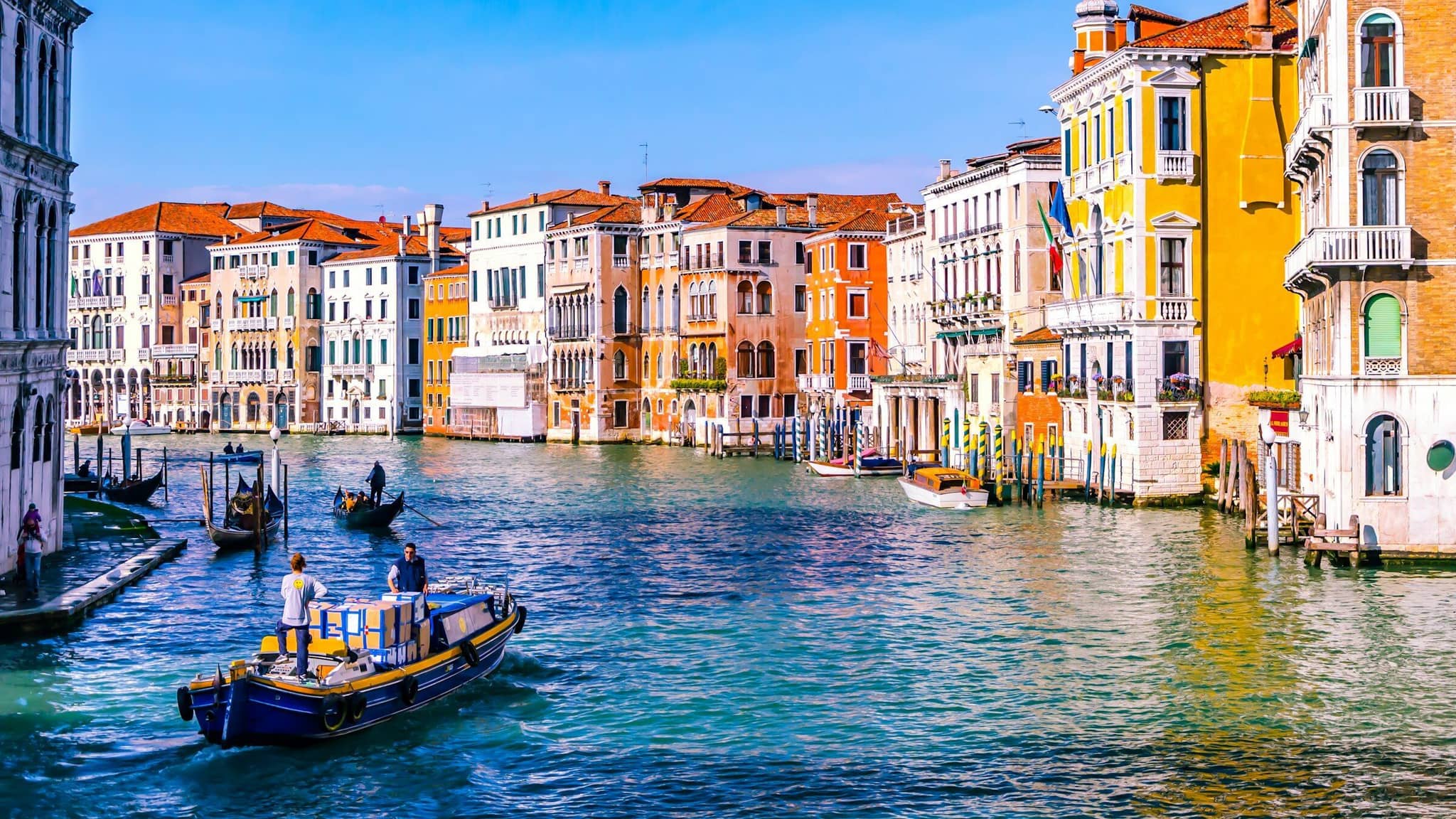
Venice is divided into six sestieri: San Marco, Castello, Cannaregio, Santa Croce, San Polo, and Dorsoduro. Five sit on the historic centre’s main islands; one (Castello) extends east toward the Arsenale. We host in four of them, and recommend a fifth (Dorsoduro). Each has its own character, its own light, its own daily rhythm.
| Sestiere | Best for | Pace |
|---|---|---|
| San Marco | First visit, short stays, proximity | Fast, busy |
| Castello | Second visit, longer stays, walking | Residential |
| Cannaregio | Long fondamente, evenings, lagoon | Quiet |
| San Polo | Markets, eating, central density | Mixed |
| Dorsoduro | Light, art, slower walks | Calm |
| Santa Croce | Train and bus arrivals, transit | Transitional |
The remainder of this guide takes each in turn.
San Marco, the central choice
San Marco is the smallest sestiere and the most central. It holds the Basilica di San Marco (consecrated in 1094), the Palazzo Ducale, the Campanile, and the Mercerie, the historic shopping thread that runs from Rialto to the Piazza. The vaporetto stops at San Marco Vallaresso and San Zaccaria carry every major line, including the airport route via Alilaguna.
Stay here for proximity. Everything in central Venice is within a fifteen-minute walk, and you can step out for a Piazza walk at first light without crossing a single bridge.
Be aware of tourist density along the main routes, and the fact that San Marco floods first during acqua alta. The Piazza is the lowest point in the city.
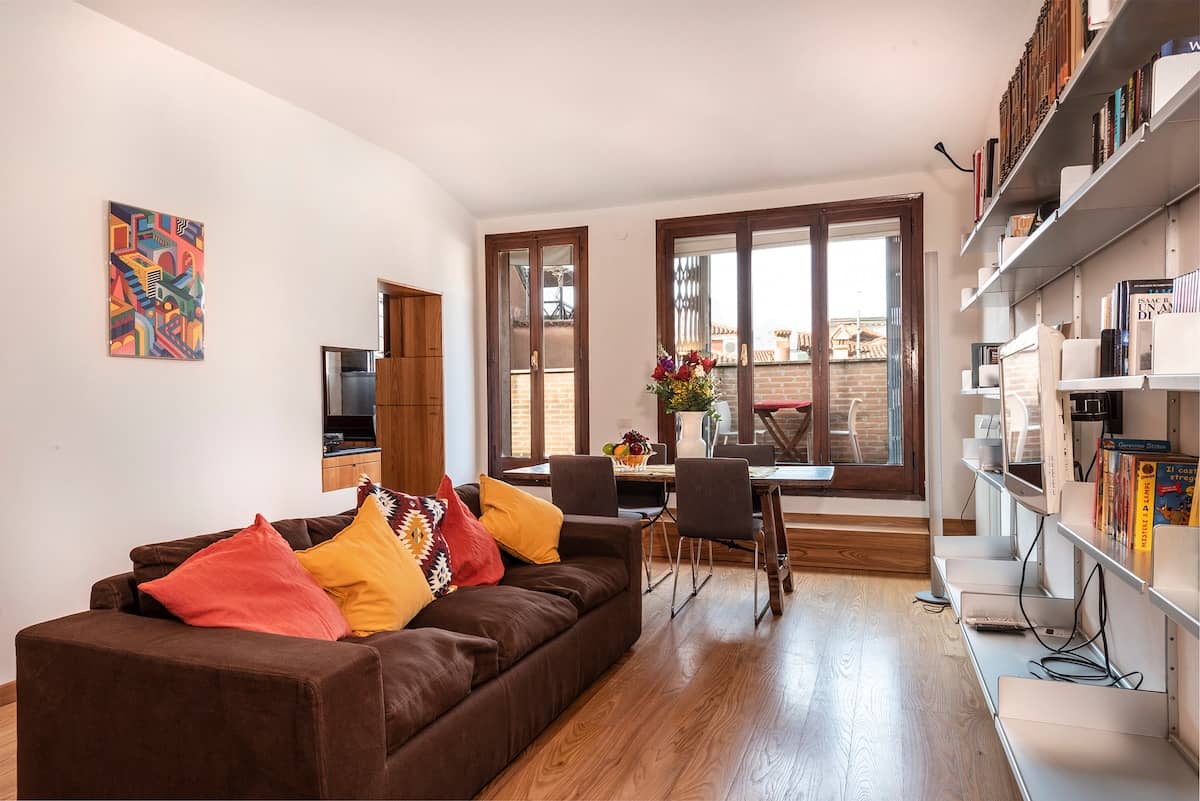
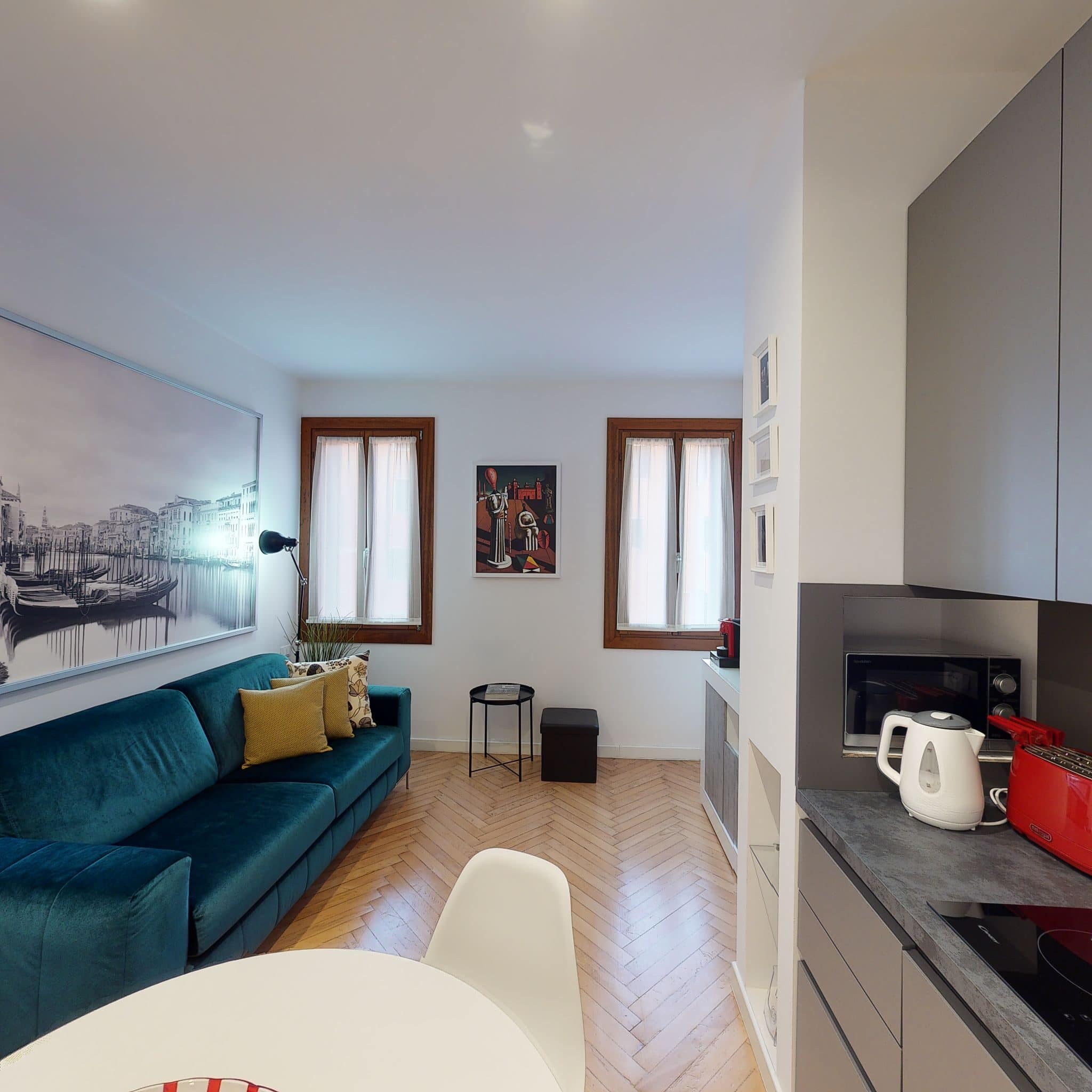
Our apartments here: ten, including Cà Magno, a canal-side flat with a private sauna, and the Baretteri Romantic Flat, two minutes from the Piazza on a quiet calle. Choose a flat one calle off the main route; the difference between Mercerie and a side calle is the difference between two cities.
Castello, for a second visit or a quieter first
Castello is the largest sestiere by surface and the most residential. Walking east from the Piazza, the calli widen, the tourists thin, and Via Garibaldi opens with a morning market. Carved by Napoleon in 1807 by filling in a canal, Via Garibaldi is the closest thing Venice has to a boulevard. The Biennale Giardini, where the contemporary art world meets every odd year, sit at the far end.
Stay here for longer stays, mornings without crowds, the rhythm of a working neighbourhood. The Arsenale, once Europe’s largest industrial complex, anchors the centre of the sestiere.
Be aware of distance from the Rialto Bridge (twelve to fifteen minutes on foot) and reduced restaurant choice on Mondays.
Our apartments here: seven, including Celestia Panoramic, a third-floor lagoon-facing flat with the vaporetto at the door, and Cà Lorenzo, a two-bedroom flat with a private terrace near Santa Maria Formosa.
Cannaregio, where Venetians still live
Cannaregio is the northern sestiere, defined by three parallel canals and the long fondamente that run beside them. The afternoon sun arrives late and stays. It holds the Venetian Ghetto, established in 1516 and the oldest in Europe; the buildings are taller than elsewhere in the city because the inhabitants could not expand outward. Madonna dell’Orto, Tintoretto’s parish church, holds his last paintings and his tomb.
Stay here for evenings on the fondamenta della Misericordia (the city’s densest concentration of bacari), a slower pace, and the lagoon on three sides. The Fondamente Nuove, on the northern edge, is the embarkation point for Murano, Burano, and the cemetery island of San Michele.
Be aware of longer walks to San Marco (twenty minutes), and that the Strada Nova fills with foot traffic during the day.
Our apartments here: one, the Little Gem in Misericordia, facing a quiet courtyard a few minutes from the Cannaregio canal.
San Polo, by the market
San Polo is the smallest sestiere by area and the most concentrated by stomach. The Rialto Market has stood in some form since the 11th century: the Pescheria (fish hall) opens at dawn, the Erberia (produce) follows, both pack up by 13:00. The market is closed Sunday and Monday morning. Beyond the market, the calli compress around two of the most important spaces in Western art: the Basilica dei Frari, with Titian’s Assumption above the high altar, and the Scuola Grande di San Rocco, sixty Tintoretto canvases under one roof.
Stay here for early risers, eating-and-drinking-focused trips, central position with quieter blocks once you turn off the Rialto axis.
Be aware of the corridor between Rialto and the market, one of the busiest in the city in the morning.
Our apartments here: one, Casa Rialto, a third-floor flat a step from the bridge.
Dorsoduro, for the light
We do not currently host in Dorsoduro. We send guests here anyway.
Dorsoduro is the sestiere of light. It runs along the Giudecca canal on the south, where the sun arrives unfiltered, and reaches the Punta della Dogana, the 17th-century customs house that is now one of the city’s most important contemporary art spaces. The Gallerie dell’Accademia hold the great Venetian paintings of the 15th to 18th centuries. The Zattere is the longest waterfront promenade in central Venice. When a guest tells us they want the slowest version of the city, we recommend staying near the Zattere or San Trovaso, the last working gondola squero open to the public.
Santa Croce, the practical reason to think twice
Santa Croce is the only sestiere reached directly by car. Piazzale Roma, the terminus of every bus and bridge from the mainland, sits in Santa Croce, and the buses arrive, the suitcases roll, the cruise ports stage. The rest of the sestiere is small and largely residential, but the noise and transit volume around Piazzale Roma is the loudest in central Venice. We do not host in Santa Croce. If you arrive by train at Santa Lucia, you can be in any other sestiere within ten minutes by vaporetto or foot.
Where not to stay, and why
The mainland looks cheaper on a booking site. The math turns. Here is what to avoid and what it actually costs you.
- Mestre (mainland Venice, ten minutes by train). Cheaper by 30 to 50 percent, but you commute thirty minutes each way to the historic centre. After two nights, you have spent your savings on regional train tickets and missed every early morning the city offers.
- Marghera (industrial district). Avoid entirely. Hotels here exist for business travellers; nothing else is within walking distance.
- Lido (long sand island east of Venice). A real beach, and the Venice Film Festival in September, but twenty minutes by vaporetto from San Marco. Stay on the Lido only if the beach is the point.
- Cruise-port hotels (near Stazione Marittima). Convenient for an embarkation morning, nothing else.
A note on apartment listings, including ours: Venice hosts often withhold the precise address until a booking is confirmed, for guest privacy. Verify the listed sestiere matches your expectation, and ask for the nearest vaporetto stop before booking.
How long should you stay?
A short answer in five lines.
- One night: a stopover. You see the Piazza and Rialto. Sleep elsewhere.
- Two nights: the Piazza, one museum (Accademia or the Doge’s Palace), an aperitivo on a fondamenta.
- Three to four nights: the sweet spot. You stop using the map. You find a bar you go back to.
- Five to seven nights: the city changes rhythm under you. Take a half-day to Burano. Walk the Zattere at sunset.
- A week or more: rare but ideal. You learn one sestiere, eat in places no guidebook lists, remember the city long after you leave.
We host minimum-stay nights per apartment; most allow three nights as a floor.
Apartment, hotel, or bed and breakfast?
Three short notes.
A hotel makes sense for one or two nights, when breakfast in a dining room and 24-hour reception are the value. The best Venetian hotels are extraordinary; the average are interchangeable.
A bed and breakfast is the middle ground. You get a real Venetian house, a host you meet at breakfast, sometimes a shared bathroom. It is the most social option.
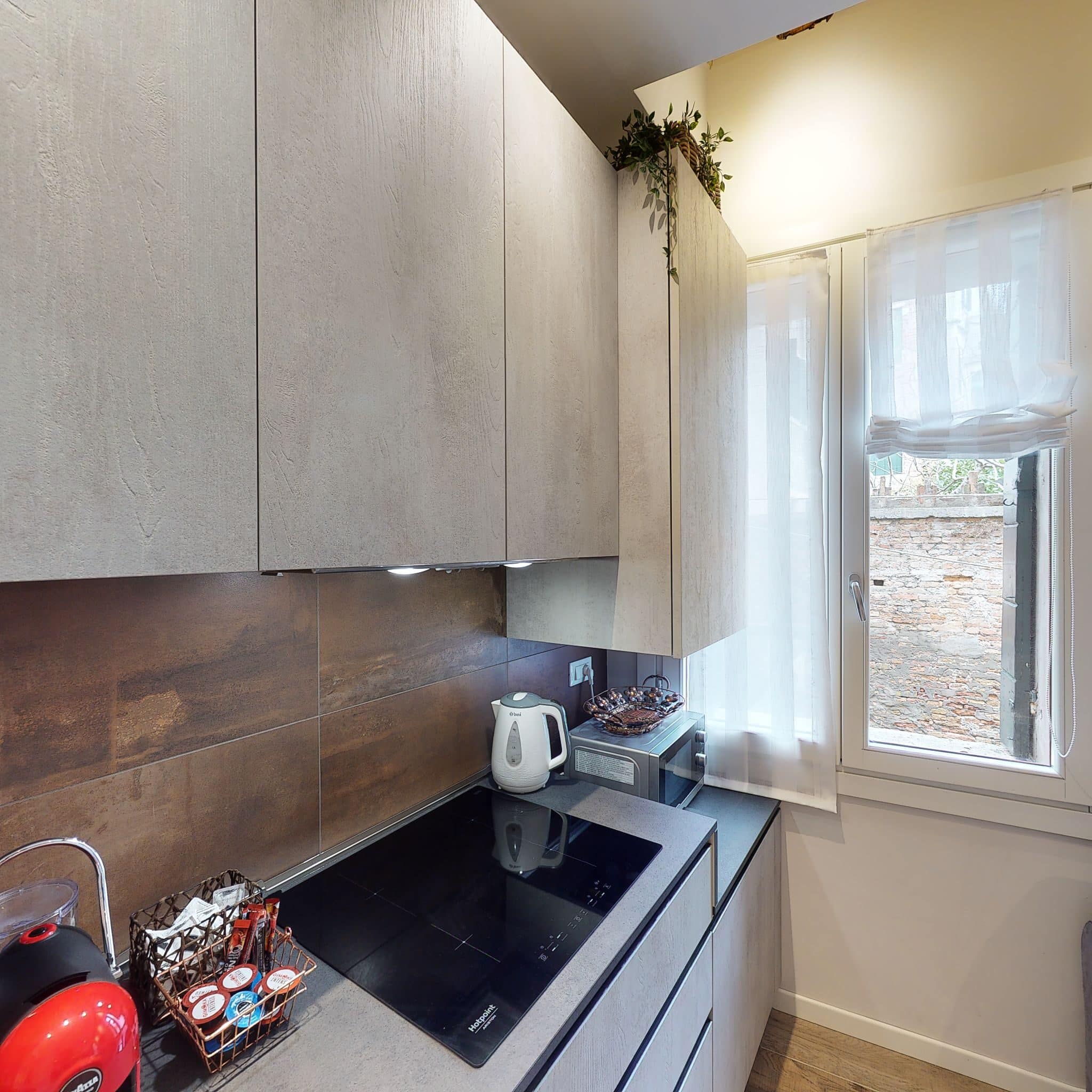
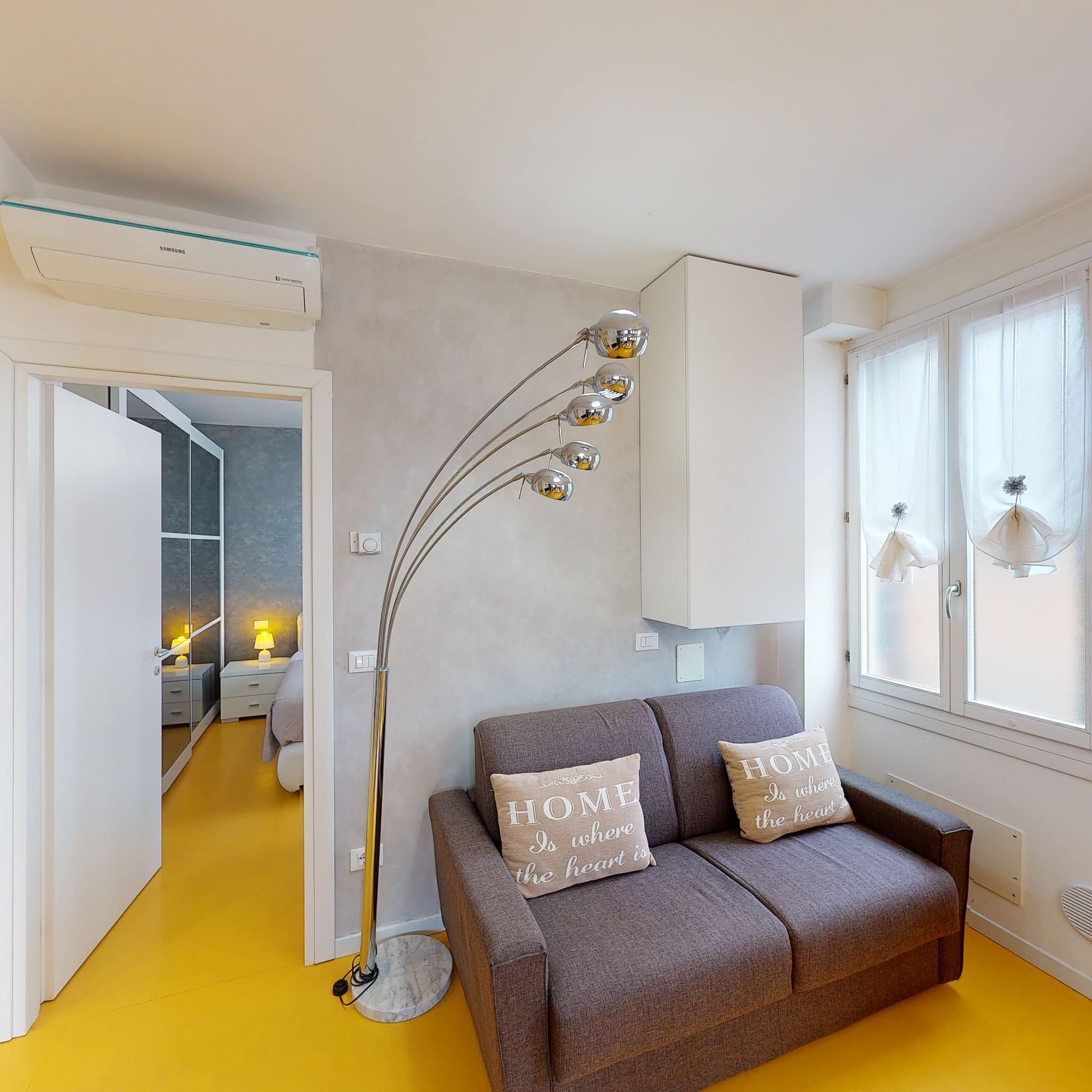
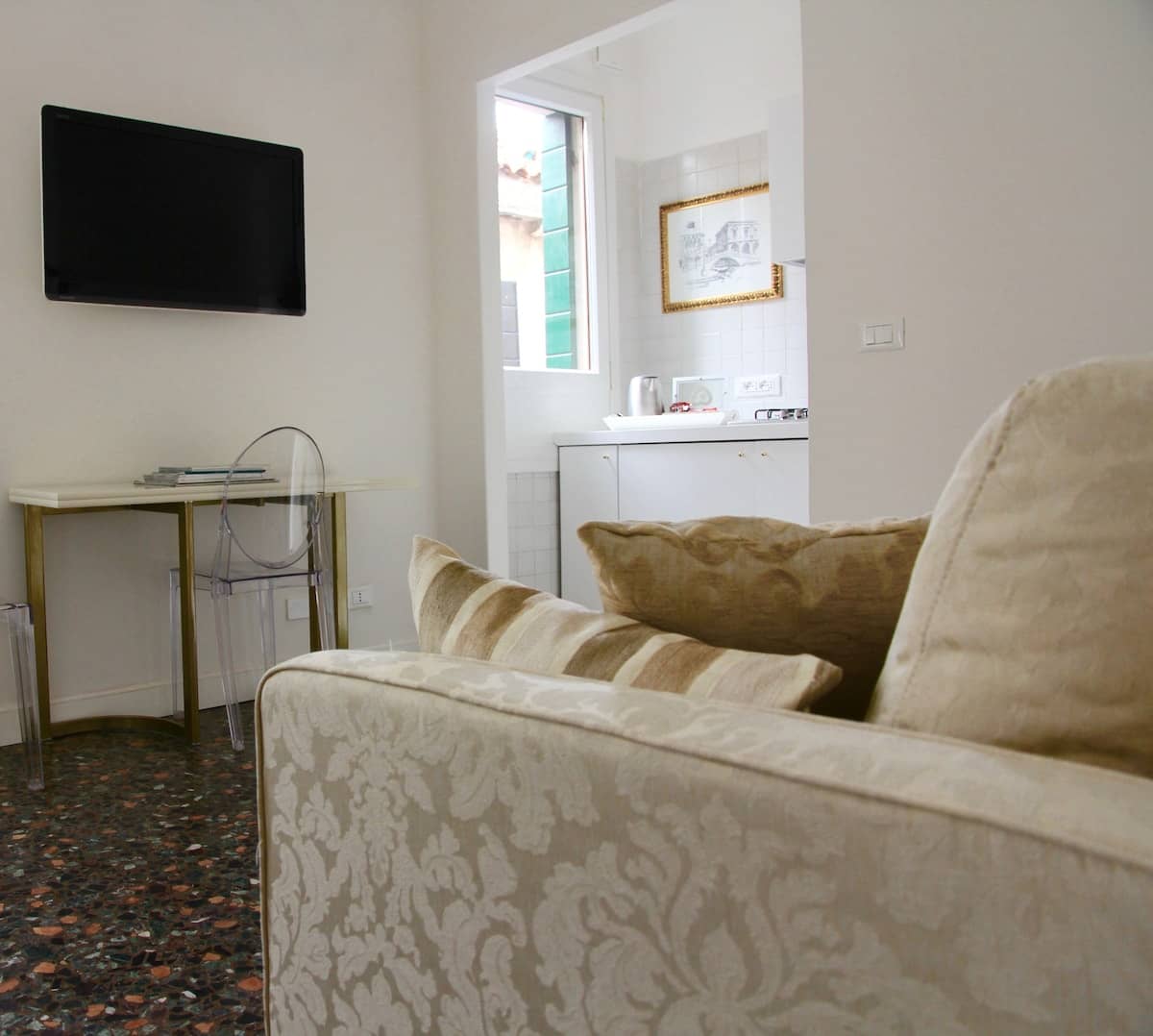
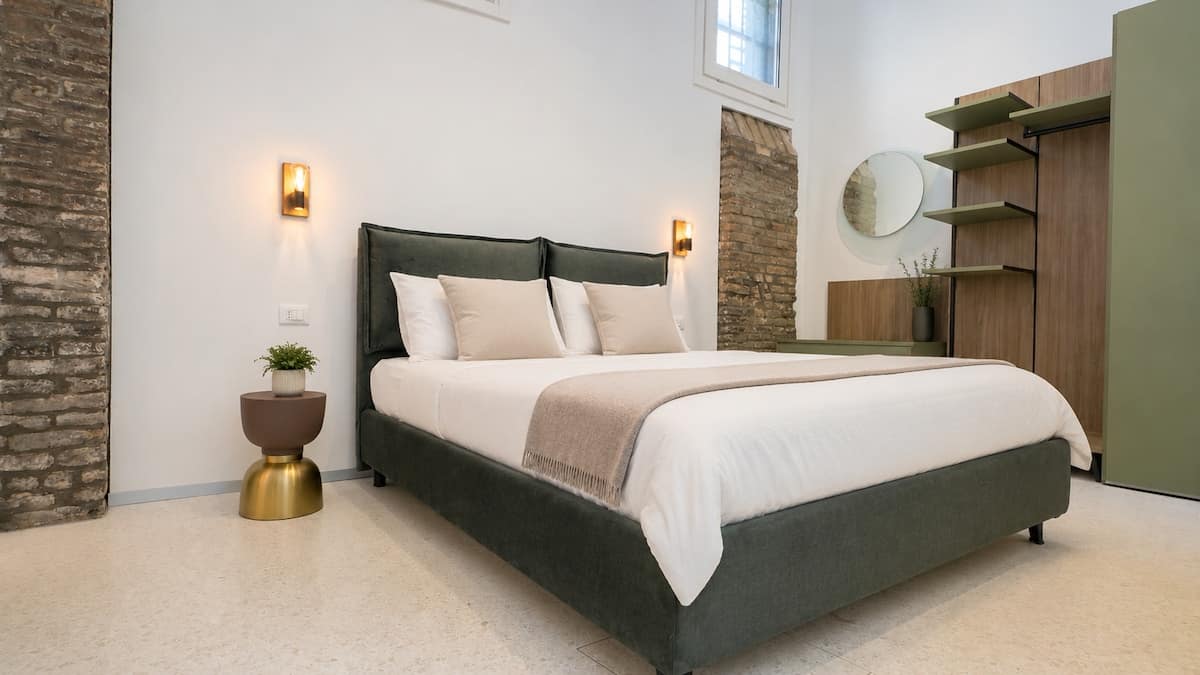
An apartment is for three nights and up. You get a kitchen, mornings on your own schedule, no shared corridors, and the city becomes a place you live in for a week rather than visit. The trade-off is the absence of staff: you are responsible for your own breakfast and your own coffee, which is the point for some travellers and the disqualifier for others. Read the listing carefully.
A short word on acqua alta
Acqua alta, the high water, happens from October to March, mostly between 06:00 and 11:00. It rarely lasts more than three hours, and the MOSE barriers, operational since 2020, have prevented the catastrophic flooding that used to occur every few years. For ordinary travellers, the practical implications are: bring waterproof boots or low rubber overshoes (sold at most newsstands), check the city’s tide forecast the night before, and accept that San Marco may be ankle-deep on certain mornings. Castello and Cannaregio flood last. Dorsoduro and the Lido barely flood at all.
If you have a sense of which sestiere fits the trip, the apartments are listed by sestiere with photos, specs, and direct inquiry. If you do not yet, the field guide covers what to see, where to eat, and how the city actually works in practice. Either path leads to the same place: somewhere in central Venice, a key in your hand, a calle you start to recognise.