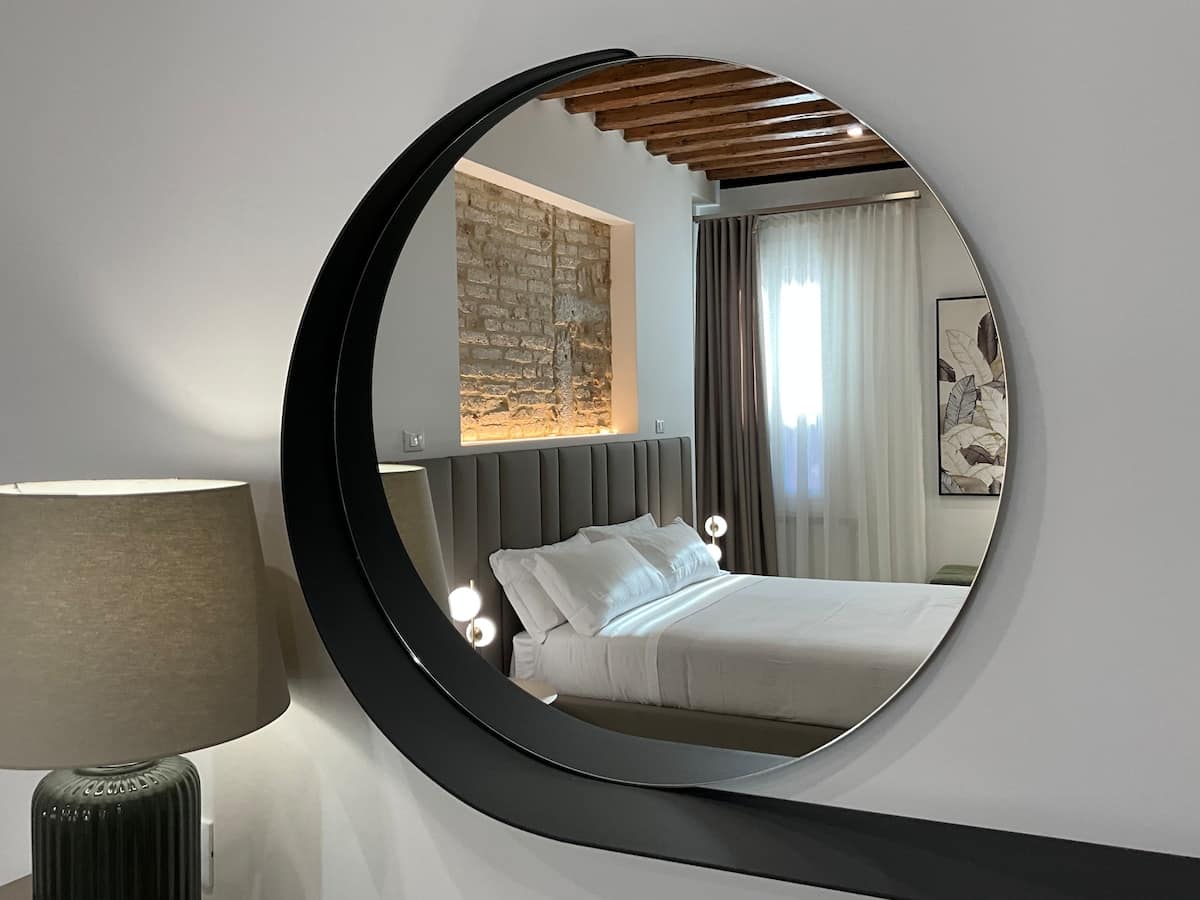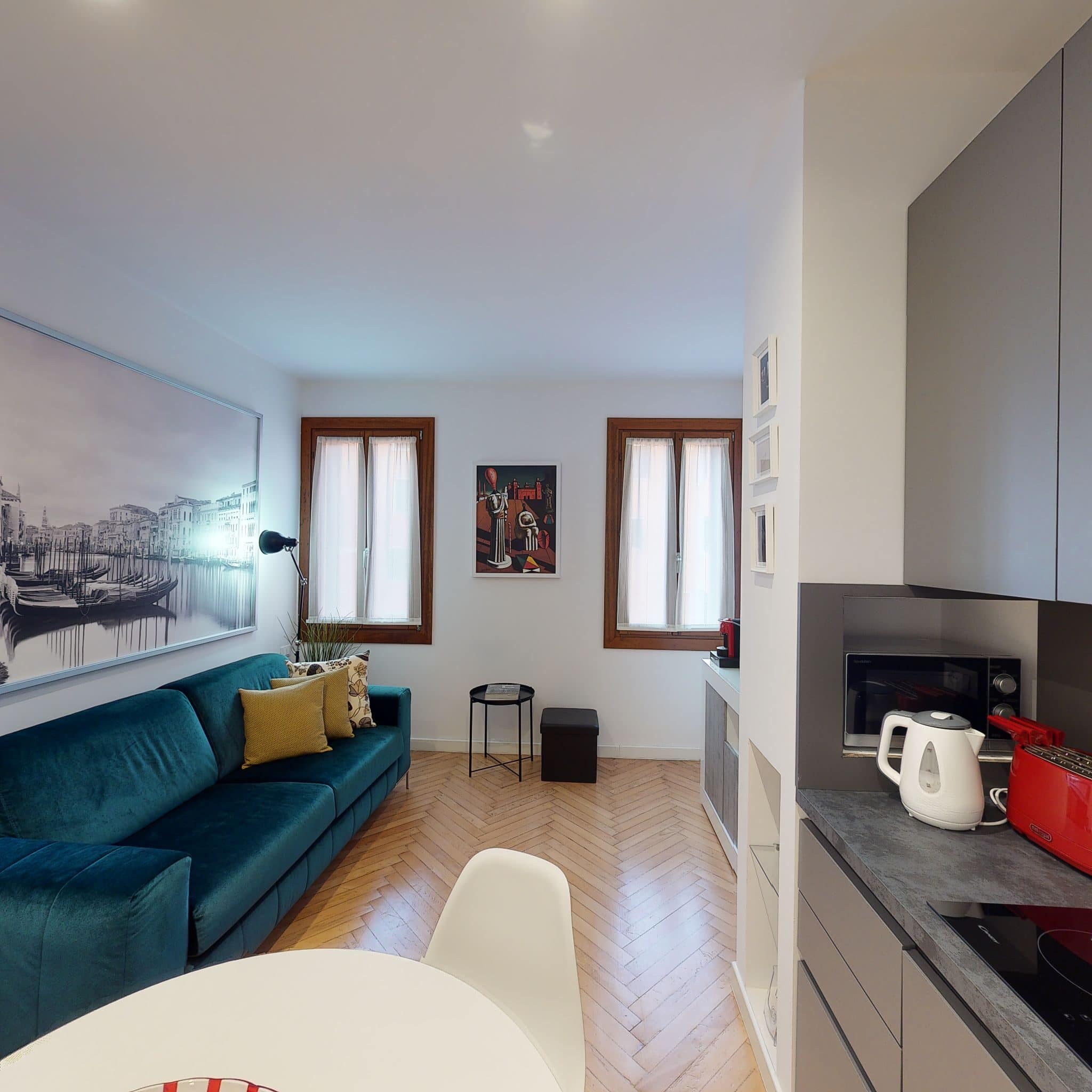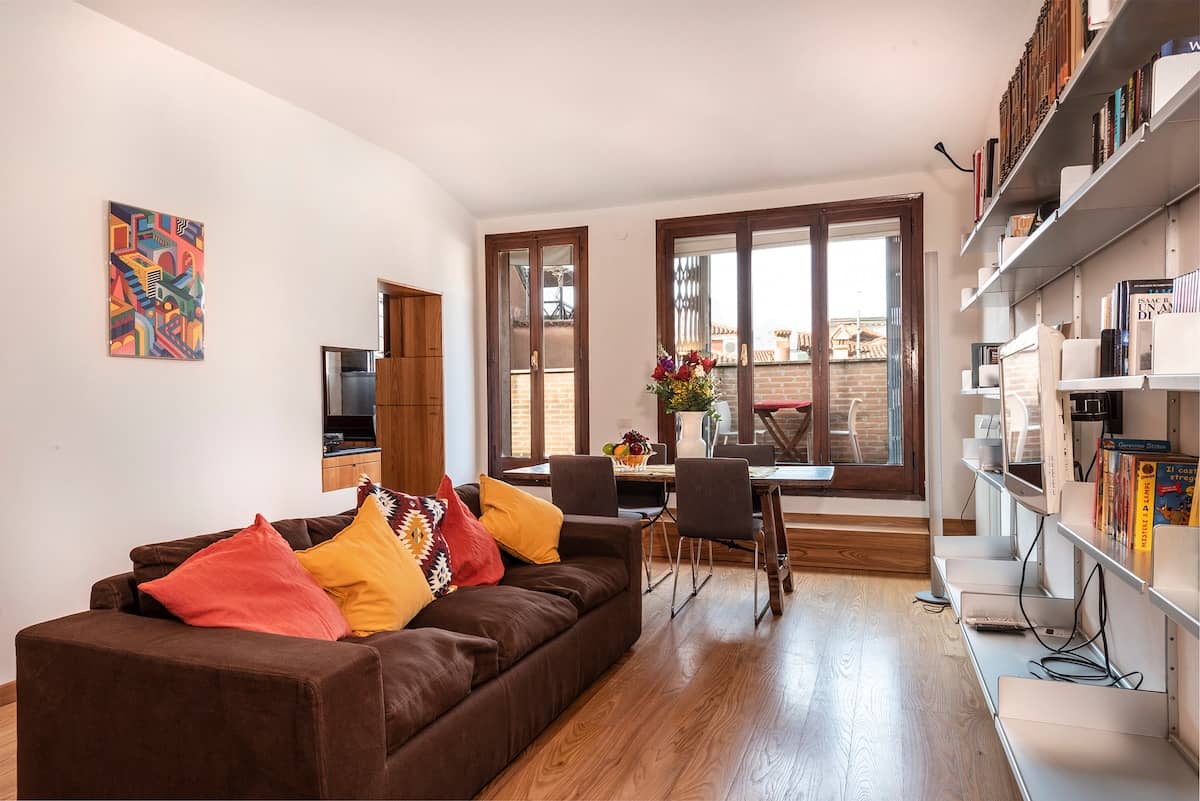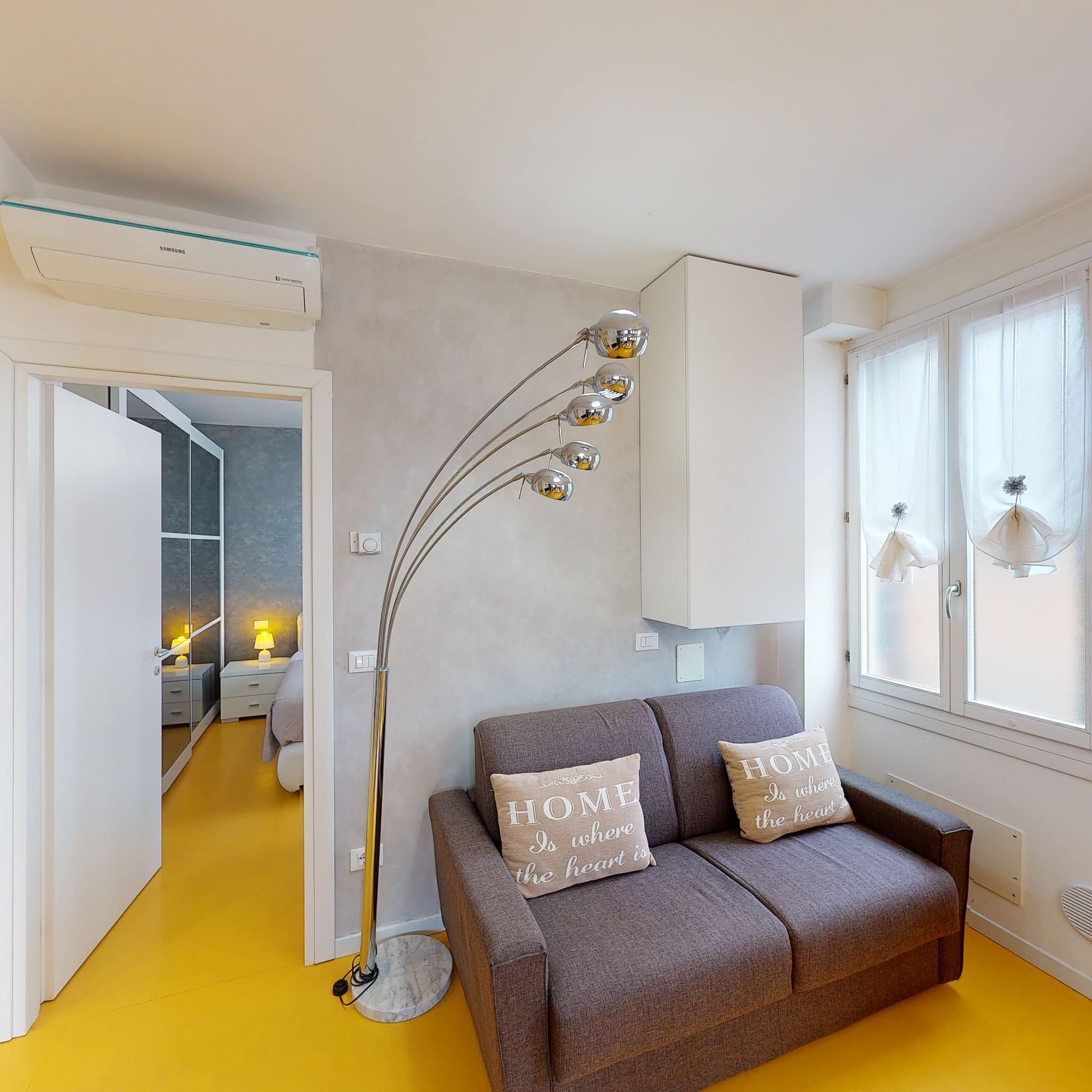
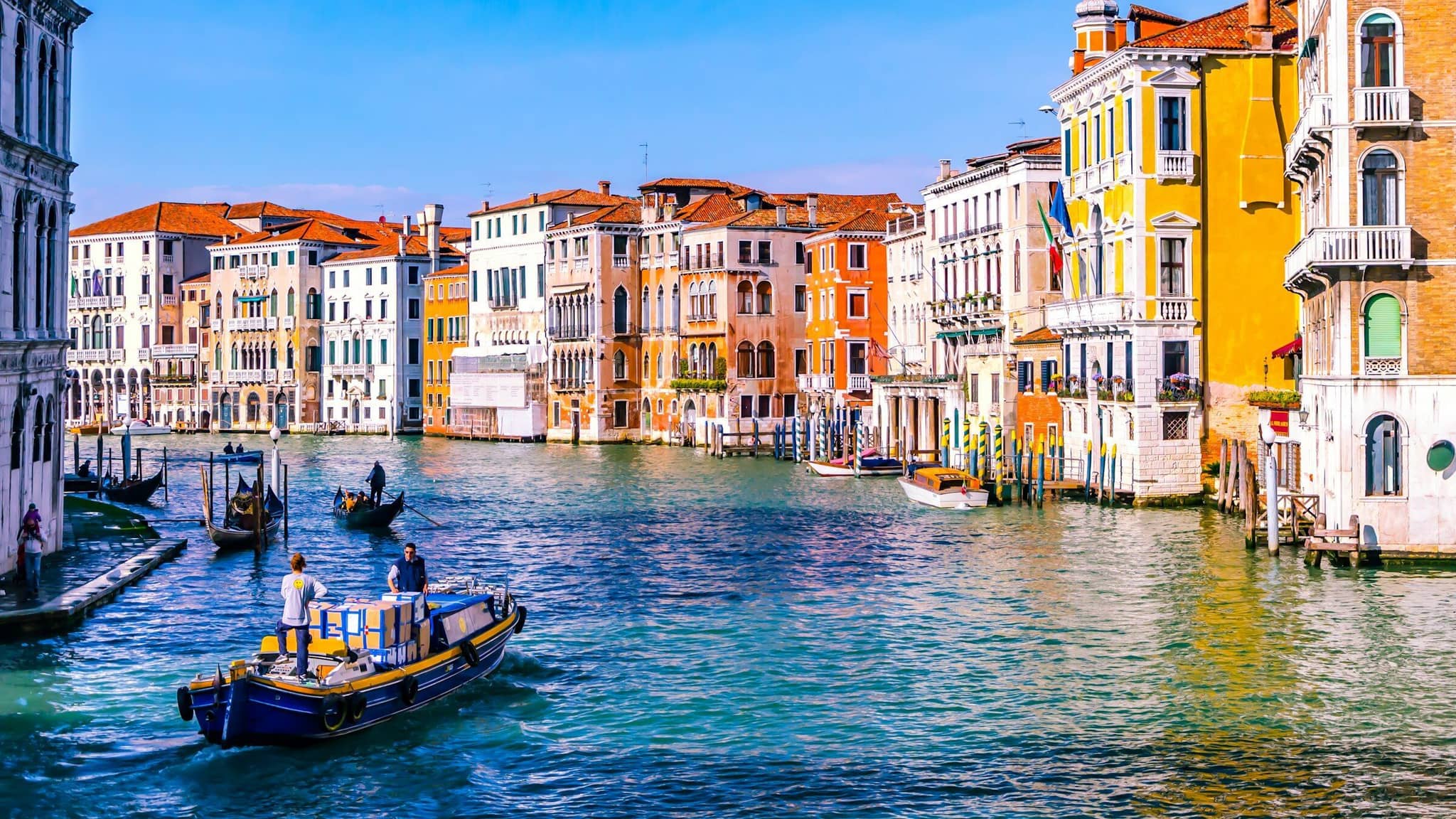
A British traveller looking for a holiday flat in Venice is usually solving a specific equation: more space than a hotel room, a kitchen for one or two breakfasts, a quiet bedroom over a calle, a short walk to the vaporetto stop, and the ability to come back to the flat at 16:00 with shopping from the Rialto market. The right Venice flat does all of that for a price that compares well with a four-star double room. This is a hosts’ guide to choosing one, written from the twelve-year inside view rather than the marketplace listing page.
The short answer
Three to five nights in a centrally placed one- or two-bedroom flat, between £150 and £280 a night, in either San Marco for the sights, Castello for the calm, or Cannaregio for the residential pace. Book directly with a managed-collection host rather than through a generic platform if you can: the flat is the same, the support is the difference.
For a longer read on how the sestieri compare and which apartment style fits which trip, the deep pillar is Where to Stay in Venice. For the wider rental market across both UK and US terminology, see Apartments in Venice.
What “holiday flat” means in Venice
A flat in Venice (in Italian, appartamento) is a self-contained dwelling inside an older residential building, typically on the first, second, or third floor of a palazzo. It has its own kitchen, its own bathroom or bathrooms, one or more bedrooms, and a sitting area. It is not a B&B (which has a shared common room and breakfast included), nor a hotel suite (which is staffed), nor a casa vacanza in the wider Italian sense (which usually means a holiday house outside the city).
The flat is the dominant accommodation type in Venice’s historic centre because the building stock is residential. There is almost no purpose-built tourist accommodation inside the six sestieri; what you find on the listings is housing that has been licensed for short-stay rental, often inside a palazzo where the owner lives on another floor or the building has been sympathetically restored across multiple flats.
The practical result, when you stay in a Venice flat, is that you spend the night in a real Venetian building, with the noise envelope and the light envelope of a real Venetian building. A canal-facing room at 07:00 hears the market boats; a calle-facing room at 23:00 hears the last drinkers walking home. Hotels insulate you from both. Some travellers want the insulation; many British travellers, in our experience, come specifically because they do not.
The sestieri compared
Venice has six sestieri; four hold most of the holiday flats worth recommending.
San Marco. Central, smallest, most expensive. The Piazza is the daily reference point. Restaurants and shops are mostly tourist-priced. The advantage is proximity: most major sights are within ten minutes’ walk. The disadvantage is that San Marco’s main calli (Mercerie, Frezzeria) are crowded between 10:00 and 18:00. Look for a flat one or two calli back from the main route. Cà Gemma is the example.
Castello. East of San Marco, residential, lower-priced. The character shifts as you go east: the western part of Castello (around Santa Maria Formosa and the Arsenale) is busy but still residential; the eastern part (around Via Garibaldi and the Giardini) is the calmest neighbourhood in the historic centre. For the Biennale, Castello is the right choice. Cà Lorenzo sits in the central part near Santa Maria Formosa.
Cannaregio. North of San Marco, the longest sestiere, with the most Venetian residents per square metre. The Strada Nuova is a main artery. The Misericordia and Madonna dell’Orto quarters in northern Cannaregio are quiet and lagoon-facing. Prices are typically 20 percent below central San Marco for similar size. Little Gem in Misericordia is the brief.
San Polo. Across the Grand Canal from San Marco, around the Rialto market. The food sestiere: the morning fish and vegetable market is at the foot of the bridge. Smaller than San Marco, with the only working market in the historic centre. Prices similar to San Marco.
Two sestieri we less frequently recommend for a first stay: Dorsoduro (excellent for art-led trips, the Accademia and the Guggenheim are there, but the bridge connections are slower from the train station) and Santa Croce (mostly a transit zone for buses and the cruise terminal, with thin good-flat stock).
The full sestiere-by-sestiere read is in Where to Stay in Venice.
The cost picture, in pounds
Prices below assume a managed central flat in 2026 high season. Off-peak (January, first half of February, November) is 20 to 30 percent cheaper; the May Biennale opening fortnight and the Carnival weeks add a 30 to 60 percent premium.
| Flat size | Nightly (high season) | Typical sleeps | Sestiere availability |
|---|---|---|---|
| Studio / 1-bed | £130 to £220 | 2 | All four central sestieri |
| 2-bed | £180 to £320 | 4 | All four; San Marco scarce above £280 |
| 3-bed | £260 to £500 | 6 | Mostly Castello and Cannaregio |
| Larger family flat | £400 to £800 | 8 | Cannaregio and Castello |
To these add the city tourist tax (£3 to £4.50 per adult per night, capped at five nights) and, on day-trip-fee days, the access fee for any day-trippers in your group, though stay guests are exempt. The full read on both is in The Venice Access Fee and Venice City Tax.
Total cost for two adults in a central one-bedroom flat over four nights in 2026 high season: roughly £580 to £900 in flat rent plus £24 to £36 in city tax. For comparison, a four-star double in the same area runs £200 to £350 per night.
How to read a Venice flat listing
The listing photographs are the easy part. The lines under the photograph are where the trip is won or lost.
The sestiere. A listing that says “central Venice” without naming the sestiere is hiding something. Insist on the sestiere name and look it up on a real map.
The nearest vaporetto stop. “Five minutes from the vaporetto” is the standard claim. Verify against the stop’s actual coordinates: the difference between San Zaccaria (a major hub) and a small side stop is the difference between waiting two minutes for a boat and waiting twenty.
The number of bridges from the vaporetto stop to the door. Bags do not roll up bridge steps. A flat that is “five minutes from San Zaccaria” but across three bridges is a different proposition with two suitcases than a flat across one bridge. Ask the host directly.
The floor. Lifts are extremely rare in the historic centre. A “first-floor flat” is one flight up; “third floor” is six flights. If anyone in your party struggles with stairs, ask explicitly.
The aspect. A canal-facing window is gorgeous and noisier. A calle-facing window is quieter and darker. A campo window (square-facing) gets late-night chatter on weekends. There is no perfect aspect; pick the one your group prefers.
Management. A managed collection (a small portfolio of flats with a real office, real phone numbers, real same-day response on a broken hob) is materially different from a private rental on a global platform. The flat may be identical; what changes is what happens on day three when the wifi goes down.
When to book
For high-season stays (April, May, the Biennale months from May to November, December for Christmas markets), book three to six months ahead. Better flats in San Marco and Castello sell out four to six months in advance for May and June.
For shoulder seasons (March, early April, late October, the first half of November), one to two months ahead is fine.
For the off-season (most of January, the first half of February before Carnival), one to three weeks ahead is enough for almost any flat.
For Carnival (typically late January to early February), book in October. Carnival sells out the central San Marco flats faster than anything except the Biennale opening fortnight. See The Venice Carnival for the dates.
Two nights, three nights, five nights
Two nights works for a couple’s mini-break, particularly outside peak season. The first afternoon and evening, dinner, breakfast, one museum, one bacaro stop, the second evening, a leisurely morning, and depart by mid-day. The honest minimum.
Three nights is the standard. You get a real first day, a free middle day, and a calm last morning. The city’s character starts to surface on day two.
Five nights is when Venice begins to feel familiar. You stop using the map. You start being recognised at the corner bar. You have time for half a day on Burano or Torcello.
Beyond five nights, the five-night tourist-tax cap kicks in: you pay the same tax for five, seven, or ten nights. Longer stays become disproportionately good value.
Where to stay, by trip shape
A first-time couple, four nights, mid-May. San Marco one or two calli back from Mercerie. Cà Gemma (two-bedroom, eight minutes from the Piazza, calm street) or Baretteri Romantic Flat (one-bedroom, two minutes from the Piazza, smaller calle).
A small family, six nights, October half-term. Castello or Cannaregio. A two-bedroom flat near a campo so the children have a place to run. Cà Lorenzo near Santa Maria Formosa is the example.
A second-time visit for art, five nights, during the Biennale. Castello, walking distance to both Arsenale and Giardini. Celestia Panoramic gives a lagoon-facing terrace and direct vaporetto-1 access.
A weekend mini-break for Carnival, two nights. San Marco for the parade access. Anywhere within ten minutes of the Piazza.
The full catalogue, by sestiere, is at the apartments page.
The honest case for booking direct
A holiday flat on a generic platform (Airbnb, Vrbo, Holidu) is the same physical flat as on the host’s own site. What differs is the support and the price.
Support: a managed-collection host has a local office, an English-speaking number, and same-day response. A private listing on a platform is at the mercy of who happens to be available. For a four-night stay in a city you do not know, this difference matters more than the price.
Price: platform fees of 10 to 18 percent on the guest side push the listed price above the direct rate. A flat at €180 per night on Airbnb often books at €160 directly with the host. Over four nights this is £80 to £120 saved, plus the certainty of who you are dealing with.
This is the explicit positioning of the Moonlight Venice collection: flats across four sestieri, twelve years of hosting, a 4.76-star average across 1,000+ Airbnb reviews, all available to book direct.
What this means for your booking
Pick the sestiere first, the flat second. Verify the vaporetto stop, the bridge count, the floor, and the aspect before falling for the photographs. Book three to six months ahead for high season, last-minute for the off-season. Bring small bills for the tourist tax on day one. Plan three to five nights to actually inhabit the city rather than visit it.
For the deeper sestiere logic, see Where to Stay in Venice. For the day-trip-versus-stay decision, see Day Trip vs Overnight in Venice. For all the flats in our own collection, the full list is here.
Authoritative external context: the Venice tourist accommodation overview at the Comune di Venezia covers the city’s licensing and tax framework that every legitimate Venice flat operates inside.