The Venice Carnival is the city’s largest annual cultural event, twelve days of masked balls, parades, costume parties, and free public spectacle that close out the period before Lent. The 2027 edition runs from Saturday 30 January to Shrove Tuesday 9 February. This guide covers the dates, the main events, the question of whether to wear a costume, what the balls actually cost, when to come and when to skip, and where to stay so the daily walk to the Piazza is a pleasure rather than a queue.
The short answer
Carnival 2027: 30 January to 9 February, with an opening water parade on the Sunday before (24 January). Daytime events are free and family-friendly; evening balls run €350 to €2,000+. Book your flat four months ahead. San Marco for direct access, San Polo or Castello for a calmer base. Costumes are optional; a simple mask is the middle path. The peak days are the two weekends; midweek is manageable.
The dates rotate slightly each year because Carnival ends on Shrove Tuesday, the day before Ash Wednesday, which depends on the Easter date. The 12-day Carnival opens 11 days before Shrove Tuesday. Easter 2027 is 28 March, so Ash Wednesday is 10 February, Shrove Tuesday is 9 February, and the official Carnival opens on 30 January.
What the Venice Carnival is
The Carnival is the late-medieval and Renaissance survival of an older European pre-Lent tradition, codified in Venice from the 13th century and made famous by the masks worn under the Republic. Carnival was banned by Napoleon in 1797 when he ended the Republic, revived as a folkloric tourist festival in 1979, and has grown each year since. The modern Carnival is part civic event (free public parades, mask contests in the Piazza, the Burano children’s parade), part costumed cultural fair (balls in private palazzi by ticket), and part visiting-the-city-in-costume that any traveller can join with a €10 mask.
The official organising body is the Carnevale di Venezia Foundation, under the city’s cultural department. The official site publishes the year’s full programme every November.
The 2027 calendar
The fixed anchors of the 12-day programme:
Sunday 24 January 2027, 11:00. Festa Veneziana sull’Acqua. The opening water parade, a procession of decorated boats with masked rowers from Punta della Dogana to the Rialto bridge. Free; best viewing from any vaporetto stop along the Grand Canal between Salute and Rialto, or from the Rialto bridge itself. The cortège is led by the Pantegana, a giant papier-mâché rat that surfaces at Rio Novo. The event is followed by a free fritole tasting on the fondamente.
Saturday 30 January 2027. The official opening. The Best Mask Contest preliminary rounds begin in Piazza San Marco at 15:00. The Ball of Dreams takes place at 20:00 at Palazzo C’a Zen ai Frari, the first of the major masked balls.
Sunday 31 January 2027, late morning. Volo dell’Angelo (Flight of the Angel). A costumed performer descends on a wire from the top of the Campanile to the Doge’s Palace, the traditional Carnival opener inside the Piazza. The Volo della Colombina (Flight of the Dove) repeats the descent at the closing on the final Sunday. Free; viewing in the Piazza requires arriving by 10:00 for a clear sight line.
Throughout the 12 days, daily at 15:00. Best Mask Contest, Piazza San Marco. A judged competition of full costumes across themed categories (historical, fantasy, traditional Venetian). Free; the costumes are the photo.
Friday 5 February 2027, 19:00. Glass Slippers Ball at the Glass Cathedral on Murano. Themed around the glassmaking tradition of the island, with vaporetto transfer from San Marco included in the ticket.
Saturday 6 February 2027. Carnival in Burano, 15:00 to 21:00. The island’s family-oriented programme with children’s parades, music, and the floats made by Buranese residents. The vaporetto from Fondamente Nove runs every 30 minutes; allow 45 minutes each way. Grand Ball Carnival in Love takes place the same evening at Palazzo C’a Zen ai Frari.
Tuesday 9 February 2027, 15:00 to 17:00. Festa delle Marie. The closing parade in Piazza San Marco, with twelve young Venetian women in historical costume representing the medieval Festa delle Marie. The Volo della Colombina (the closing descent from the Campanile) opens the ceremony. The official Carnival ends at 17:00.
The Arsenale Water Show runs evenings on 29 to 31 January and 5 to 10 February with music, lights, and performance inside the Arsenale’s walls (ticketed, around €40 to €80).
What it costs
The free public Carnival, in 2026 prices, costs nothing.
The free programme. All Piazza San Marco events, the Volo dell’Angelo and Colombina, the Festa Veneziana water parade, the Burano daytime celebration, the Festa delle Marie, every street parade and informal mask gathering. Free; the city’s public-event design absorbs them.
A mask. A reputable Venetian mask from a real mascarera (Ca’ Macana, Atelier Marega, La Bottega dei Mascareri) costs €10 to €40 for a simple half-mask, €60 to €180 for an elaborate full piece. Avoid the €5 plastic masks on the tourist stalls; they have no relation to the craft and look it on photographs.
A costume. A hired full costume, dress and accessories, runs €200 to €600 for an evening at a specialist (Atelier Pietro Longhi is the most respected; book in November). Bought, a serviceable costume runs €400 to €1,500. Travellers committing to a full ball wear a costume; daytime visitors mostly do not.
A masked ball. €350 to over €2,000 per person depending on the venue, the menu, and the dress code. The grandest are the Ballo del Doge (not in the 2027 lineup at the time of writing, but historically the most expensive at €2,000+) and the Mascheranda. The 2027 balls listed above (Ball of Dreams, Glass Slippers, Carnival in Love) run €500 to €700. All require formal historical costume and reservations months ahead; the official Carnival ball calendar is the booking gateway.
When to come
The three viable windows:
The opening week (24 January to 1 February). The Festa Veneziana water parade, the Volo dell’Angelo, the first Best Mask rounds, the Ball of Dreams. Lower crowd density than the closing week. The mask-makers’ workshops are still calm enough to commission a piece.
The closing weekend (5 to 9 February). The Glass Slippers Ball, the Grand Ball Carnival in Love, the Burano celebration, the Festa delle Marie, the closing Volo della Colombina. The most spectacle, the highest crowd density. Book everything six months ahead.
Mid-Carnival (1 to 5 February). The quieter window. Daily Mask Contests, walking-in-costume in less crowded calli, restaurants more available. We recommend this to second-time Venice visitors who want the Carnival atmosphere without the peak-day crush.
The two days to avoid for a calm visit (and to embrace for the full spectacle) are the central Saturday (6 February 2027) and the closing Tuesday (9 February 2027). Piazza San Marco on those days holds 30,000 to 40,000 people across the afternoon.
What to wear, in three tiers
Tier 1: nothing special. Many travellers spend Carnival in normal clothes and watch the parades. This is fine. You see the costumes from the inside-watcher position. The free events are designed for all dress codes.
Tier 2: a simple mask. Buy a €15 to €40 mask from a reputable mascarera on day one, wear it through the public events. You are now part of the photographs.
Tier 3: full costume. Hire from Atelier Pietro Longhi, Tragicomica, or another listed costumier. €200 to €600 for an evening including help dressing. Wear to a ball, walk back through San Marco at midnight in costume.
There is no required dress code for the daytime free events. Children almost always come in costume because their costumes are cheaper and lighter. Adult travellers split roughly 60-40 between street clothes and some level of dress-up.
Where to stay
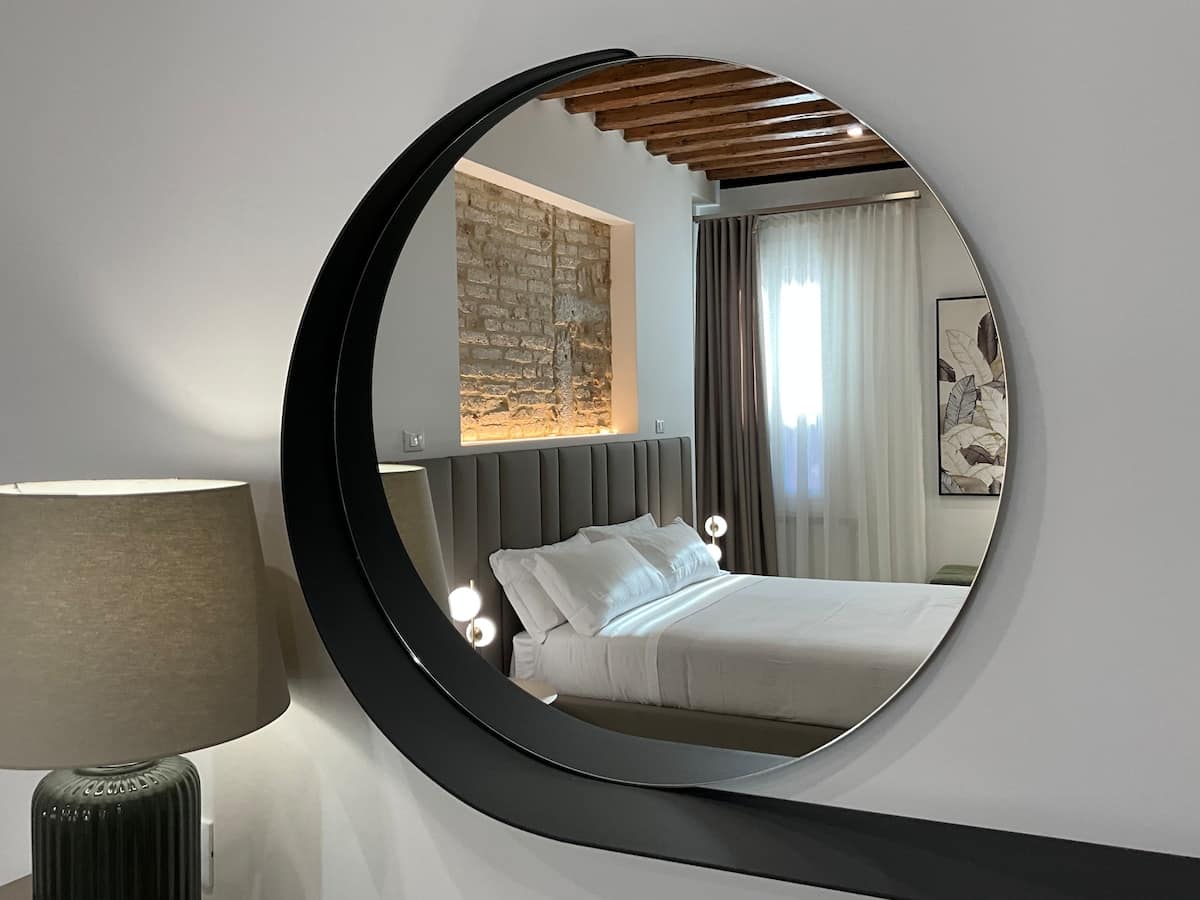
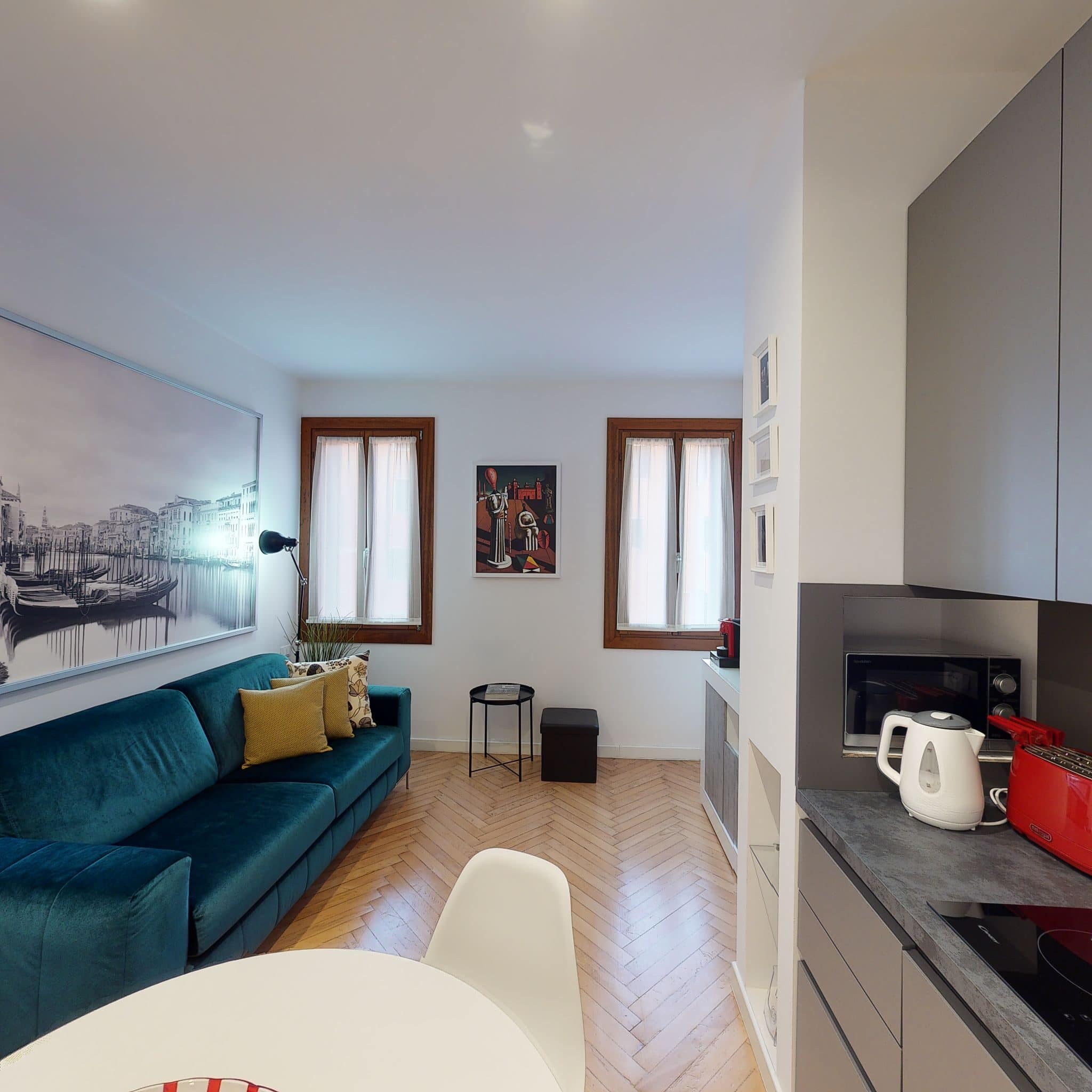
The right answer for most travellers is San Marco, one or two calli back from the main route, with direct walking access to the Piazza. Cà Gemma (8 minutes from the Piazza, two-bedroom, calm street) and Baretteri Romantic Flat (2 minutes from the Piazza, one-bedroom) are the central options.
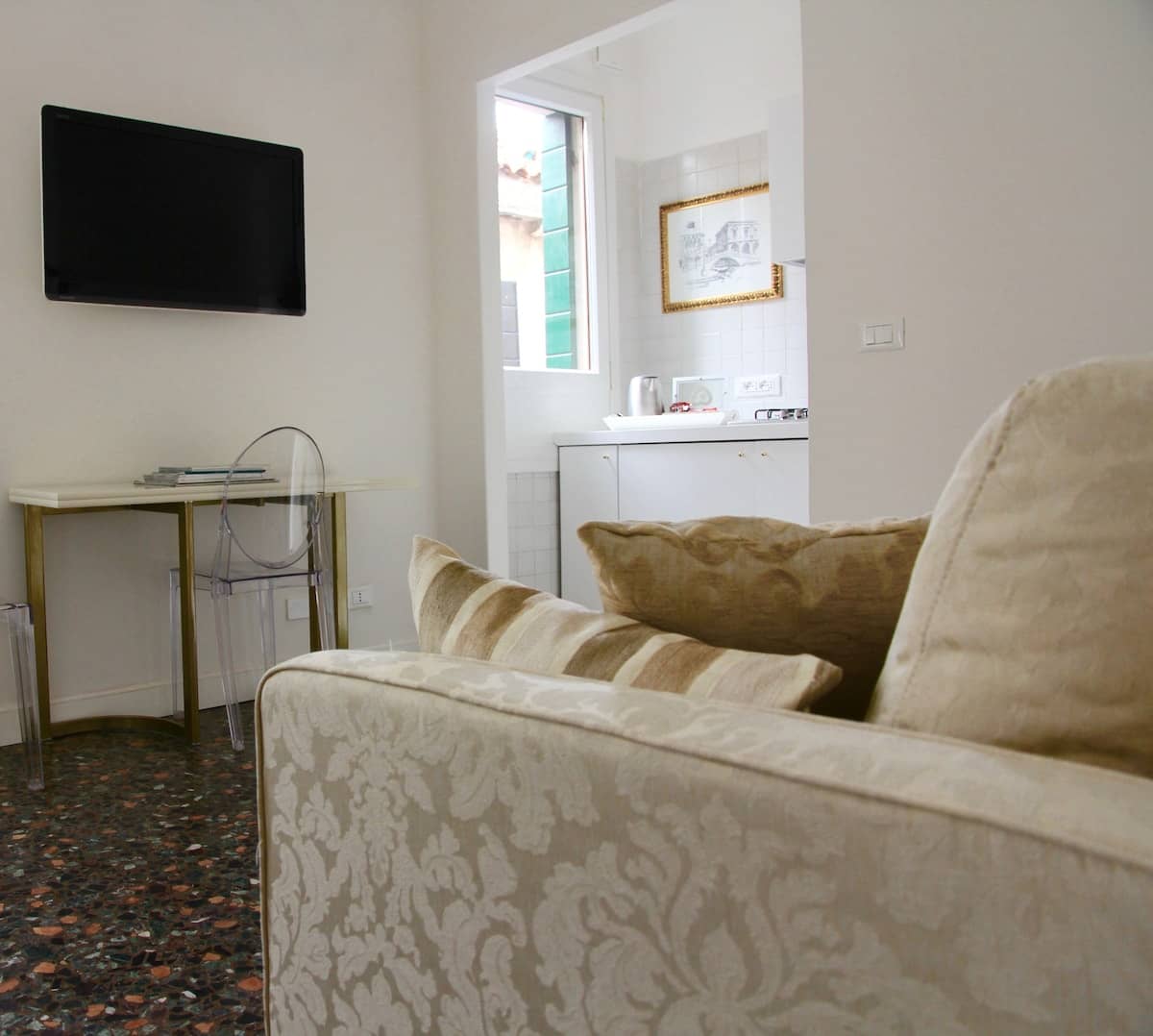
For a quieter base with a 10 to 15-minute walk to the Piazza, San Polo around the Rialto is the right alternative. Casa Rialto is the example, ten minutes’ walk to San Marco via the Rialto bridge, with the morning market right outside.
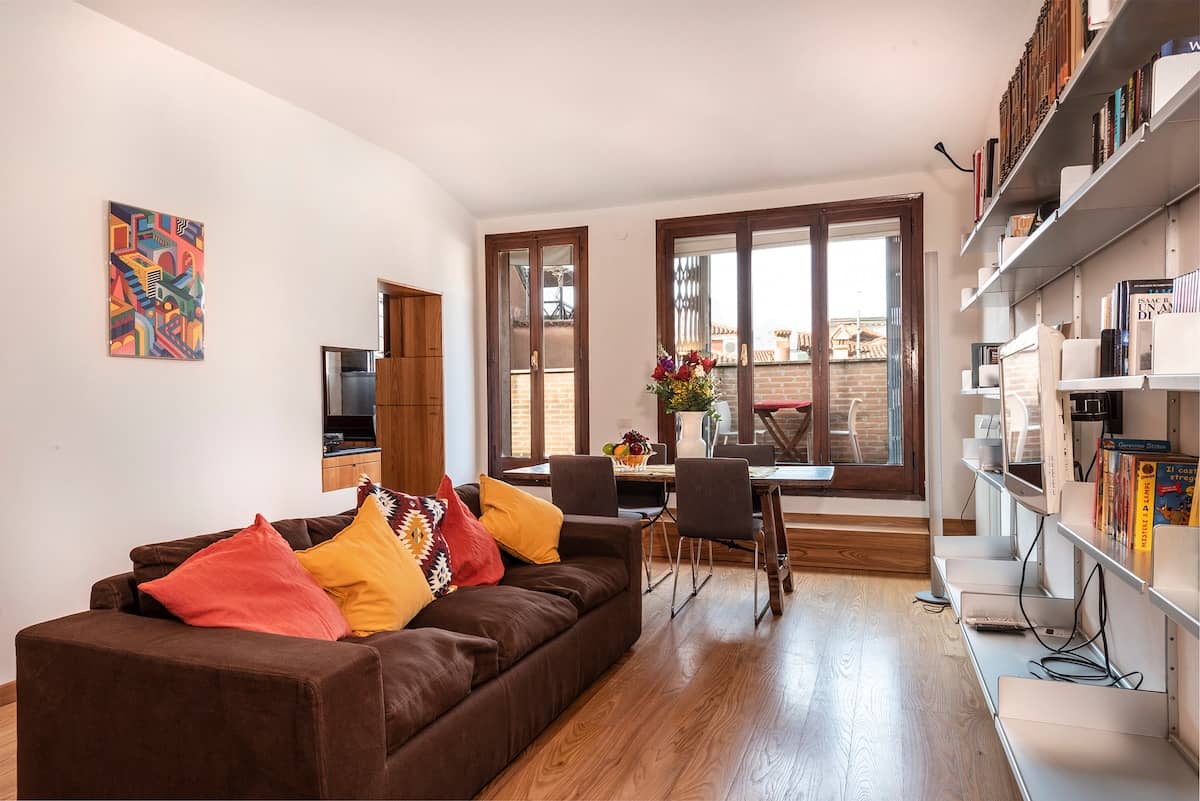
For a family stay with children doing the daytime Carnival, Castello is the calmest base. Cà Lorenzo near Santa Maria Formosa gives 15 minutes’ walk to the Piazza and a quiet bedroom for sleeping through the late-night noise of the central sestieri.
For the deeper sestiere comparison, see Where to Stay in Venice. For booking timing in general, see Best Time to Visit Venice.
Practical points
Vaporetti. ACTV runs a special Carnival timetable with additional services across the 12 days, particularly extra night runs after the balls. Buy a multi-day pass; you will use it. See The Venice Vaporetto for the line and ticket primer.
Restaurants. Book Friday and Saturday dinners three to four weeks ahead. Lunch is more flexible; the bacari (small Venetian wine bars with cicchetti, the city’s bite-sized snacks) hold the bar for walk-ins and stay reasonable in price even at peak Carnival.
Crowd safety. The central Piazza on the peak afternoons is densely packed. Stay with your group; the city briefly closes the access calli when the Piazza reaches capacity. Children should be kept hand-in-hand or in a stroller with high visibility.
Photography. Costumed walkers are happy to be photographed and often pose. The Italian polite ask is a slight nod or posso? before raising the camera. Costumes are art; the wearer has invested in being seen.
The access fee. Carnival 2027 falls outside the day-tripper access fee window (3 April to 26 July in 2026; the 2027 window will be announced in December 2026 but historically follows the same spring-summer pattern). Day-trippers to Carnival have so far not paid the access fee. See The Venice Access Fee for the 2026 rules and the framework that will be reused.
Costume crime. Italian law prohibits face coverings in some public-order contexts, but Carnival mask-wearing in Venice during the official period is explicitly permitted under the city’s annual ordinance. No mask, no issue; with mask, you are fine.
The honest visit shape
Three or four nights, arriving on the Friday or Saturday of either Carnival weekend. One day for the Piazza events (Volo dell’Angelo on the opening Sunday, or the Festa delle Marie on the closing Tuesday). One day for the off-route walk through Castello or Cannaregio while the central sestieri are at peak crowd. One evening at a ball, or one evening in costume in San Marco watching others at theirs. One quiet morning at the Rialto market for cicchetti and a glass of wine before the day starts.
Carnival is the version of Venice most travellers carry as a postcard image. The honest reality is that it is busier, louder, and more expensive than the city’s other faces, and it rewards travellers who book early and stay long enough to find the calm hours inside the festival days. The Tuesday morning after Shrove Tuesday, when the city wakes into Lent and the costumes vanish, is one of the strangest hangovers in European travel.
The fastest route from this article to a real apartment for the 2027 Carnival dates is the full catalogue. Authoritative external sources: the official Carnevale di Venezia site for the year’s programme; the Carnival in Venice ball calendar for ball booking; and the Wikipedia entry for the 700-year institutional history.