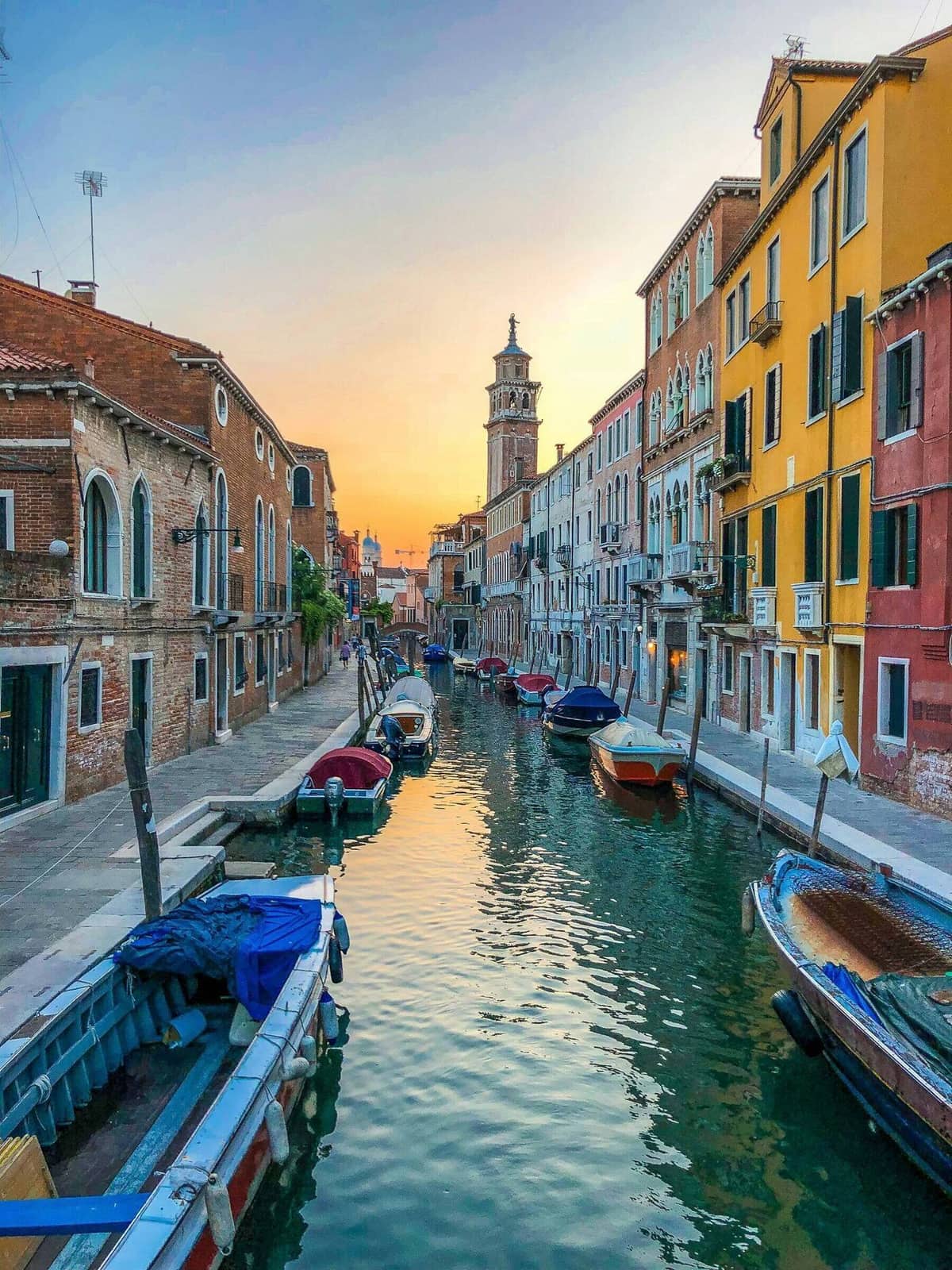
Venice with children works better than most parents fear. The city is car-free, the journeys are short, every walk crosses a bridge that a four-year-old can climb, and the food economy includes gelato as a structural element. The honest challenges are different from what travel guides usually mention: not safety, but stroller logistics on the bridges; not menu, but the third late-evening dinner that breaks a kid’s sleep; not access to attractions, but pacing the day to keep the seven-year-old going past mid-afternoon. This guide is a hosts’ read on family stays from twelve years of welcoming families with children of every age.
The short answer
Castello, Cannaregio, or Dorsoduro for the stay. Three to four nights for the visit. A lightweight foldable stroller, not a luxury triple. One sit-down meal a day and two casual ones. A half-day in Burano on the islands rather than the Doge’s Palace. Children under 10 are exempt from the tourist tax; under 14 are exempt from the day-tripper access fee.
Why Venice works for children
The structural argument first.
No cars. The historic centre is fully pedestrian. There are no scooters, no Vespas, no rental cars. A child walking between you on a calle has no traffic to worry about. This single fact is the largest difference between Venice and any other European city for a family stay, and it shapes everything else.
Walking distances are short. From one end of the central tourist circuit to the other (Piazzale Roma to Giardini) is 3 kilometres. Most days you walk less. Children who would balk at a 5-km walk in a normal city will happily cover 6 km in Venice because the walk breaks into 200-metre legs between bridges and small squares.
Bridges and boats. Children love stairs and they love boats. Venice gives them stairs every 100 metres (every bridge is a small climb) and boats throughout the day (the vaporetto is your bus). The combination is intrinsically engaging in a way that an underground metro and a flat boulevard are not.
Gelato infrastructure. Approximately every 200 metres throughout the historic centre, a gelateria sells small cones for €2 to €3.50. This is a non-trivial energy-and-mood-management tool for children walking 6 km a day.
Safety. Crime against tourists in Venice is mostly pickpocketing in San Marco and Rialto at peak times. Violent crime is essentially nil. Children walking with parents through Castello at 21:30 are safer than children on most Italian city streets.
Which sestiere to stay in
The wrong answer is San Marco. The right answer is one of Castello, Cannaregio, or Dorsoduro.
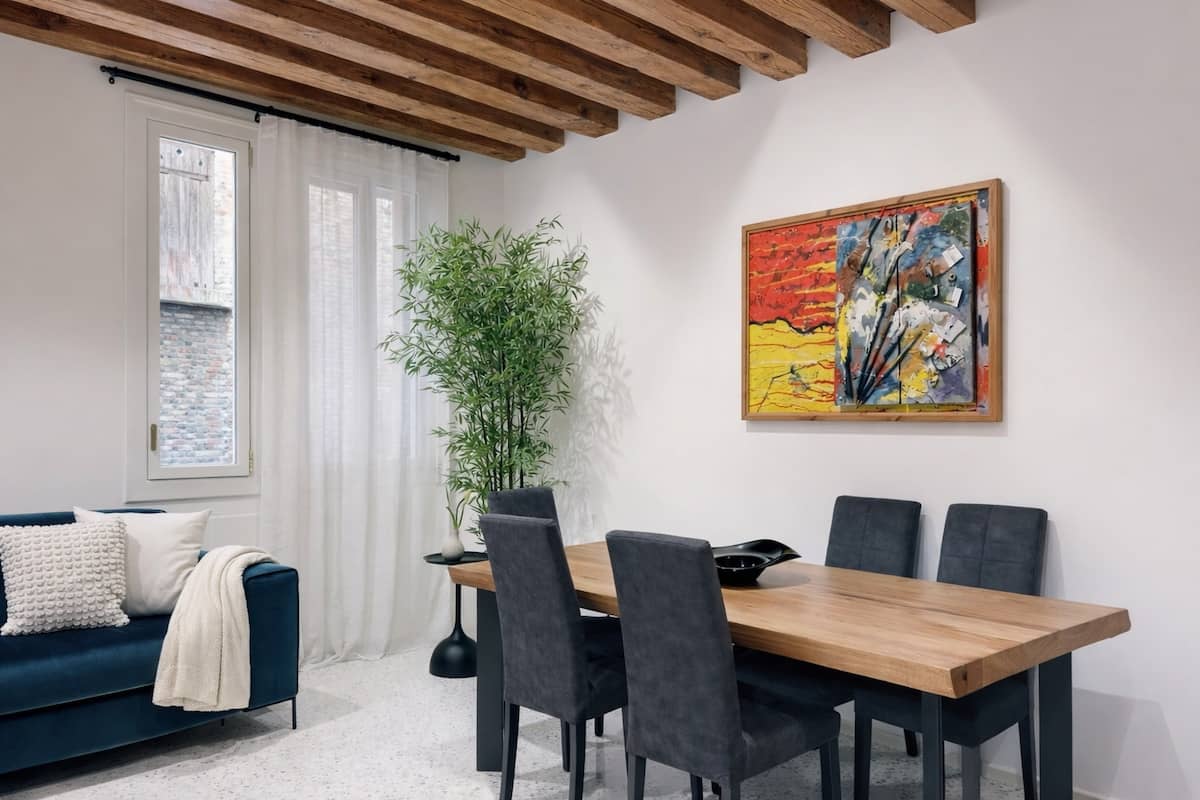
Castello. The eastern sestiere, residential, with the largest concentration of Venetian families. The eastern half (around Via Garibaldi and the Giardini) is the calmest part of Venice and has the largest park (Giardini della Biennale, with a children’s playground). Cà Lorenzo near Santa Maria Formosa is the central-Castello option; for a longer stay, look at flats in eastern Castello near Via Garibaldi.
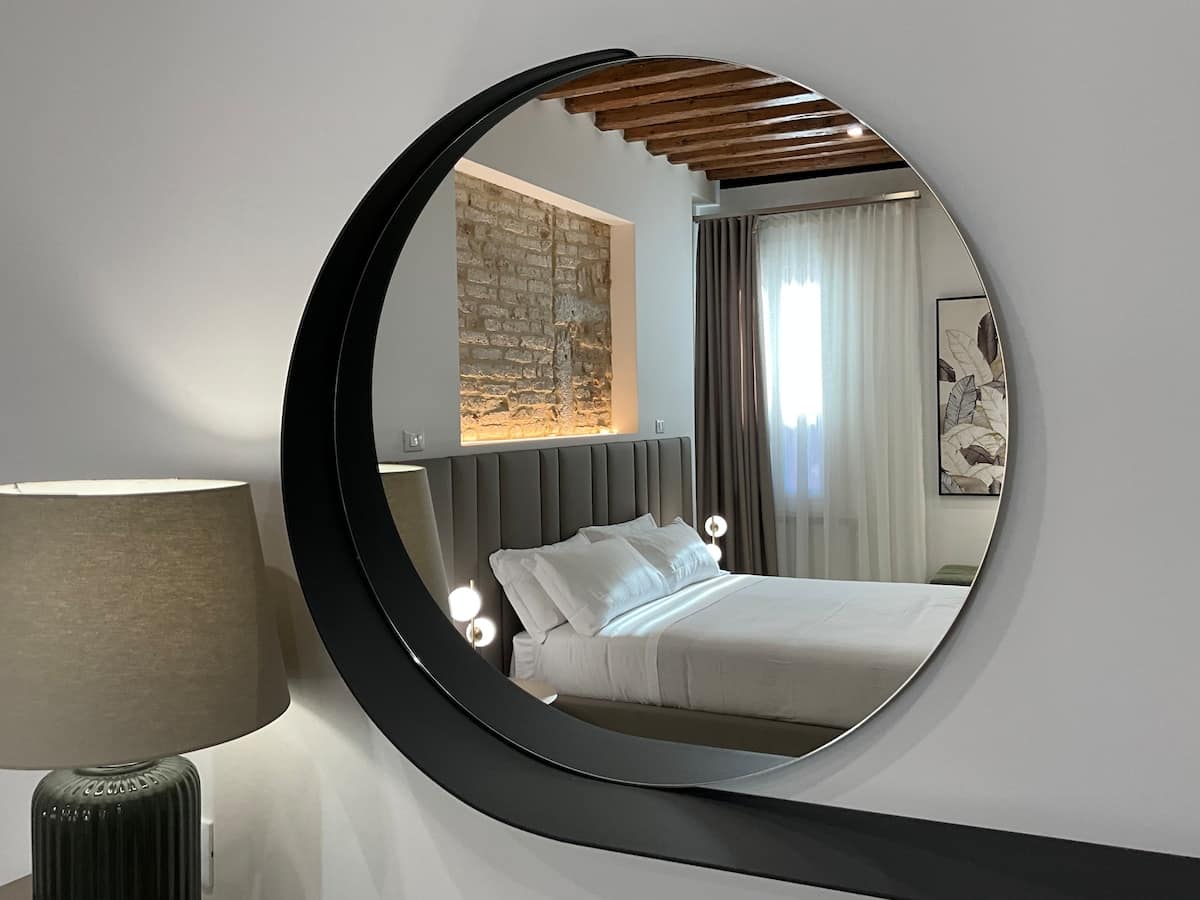
Cannaregio. The long northern sestiere, with the densest Venetian residential population and the most Italian-family-oriented restaurants. The Ghetto Nuovo campo has a Jewish-history museum and an open square; Campo dei Mori and the Madonna dell’Orto area give space for play. Little Gem in Misericordia is a quiet Cannaregio option.
Dorsoduro. The southern sestiere, with the student-life campo (Santa Margherita) where local children play in the afternoon, two major museums with under-12 interactives (the Peggy Guggenheim has children’s tours), and the long Zattere quay for evening walks.
San Marco. Workable for one or two nights, cramped for a week with children. The flats are smaller, the calli are denser, the campo space is limited. For a Carnival weekend with one child, fine; for a five-night summer family stay, look elsewhere. Cà Gemma (8 minutes from the Piazza, two-bedroom, calm street) is the right San Marco choice if you do stay there.
San Polo. A working alternative around Campo San Polo (one of the largest squares in the city, with afternoon football games among local children) and Campo dei Frari. Reasonable trattoria density. The Rialto market on weekday mornings is a child-friendly window into working Venice.
Santa Croce. Mostly transit zone for buses and the cruise terminal, with less compelling residential character. Thin good-flat stock for families.
For larger families needing three bedrooms or more, the available stock concentrates in Castello and Cannaregio rather than San Marco. The full sestiere read is in Where to Stay in Venice.
What children actually enjoy
The six reliable winners from twelve years of guest feedback:
The vaporetto. A 30-minute ride down the Grand Canal on line 1, sitting on the open back deck, is one of the highest enjoyment-per-euro activities in any European city for under-10s. Buy the 72-hour pass on arrival and let them set the day’s vaporetto agenda for a couple of journeys.
Piazza San Marco at dusk. Feeding pigeons is officially banned now (since 2008) but the children’s classic of running across the Piazza after the day-trippers leave, in the late-afternoon light, with the Basilica facade lit, still works. Buy a gelato at Marchini Time and walk.
A mask-painting workshop at a mascarera. Real Venetian mask-makers (Ca’ Macana on Calle delle Botteghe in Dorsoduro is the most welcoming) run drop-in or pre-booked workshops where children paint their own mask. €20 to €40 per child including the take-home mask. 60 to 90 minutes; suitable for ages 5 and up.
Watching glass-blowing on Murano. Many of the active furnaces along Fondamenta dei Vetrai give live demonstrations on weekdays for €5 to €10. The 5-minute demonstration of glass being shaped into a horse or vase is reliably mesmerising for ages 4 to 12. Skip the Murano Glass Museum unless the children are older or specifically interested.
The Burano half-day. A 45-minute vaporetto ride to the island of painted houses. Walk the streets photographing the colours, climb the leaning campanile of San Martino, lunch at Al Gatto Nero (book ahead, child-friendly). The boat ride out and back is as much of the day as the island itself.
The Natural History Museum (Museo di Storia Naturale). At the Fontego dei Turchi on the Grand Canal. €10 adults, free under 25. The museum is small (90 minutes inside), has hands-on exhibits, an aquarium of lagoon species, and a dinosaur skeleton in the central hall. Better for under-12s than any of the art museums.
Activities to skip or shorten with younger children:
The Doge’s Palace is too long (2 hours) and too verbal for under-8s without a children’s audio guide. Book the Secret Itineraries tour (with a 90-minute live guide) for ages 10+ who can follow the historical narrative.
The Accademia is wonderful for older children with art interest; not for under-10s in a typical group.
The Frari church is short enough (30 minutes) to work for any age, and the Titian altarpiece is impressive even without context.
Practical questions
Strollers. A lightweight foldable stroller is the right tool. The luxury triple stroller is not. Venice has bridges every 100 metres; each bridge has 6 to 12 steps; some have wheel-rails to roll a buggy up and down, many do not. Plan to lift the stroller. A baby carrier (front or back) is a practical alternative for ages under 2 and is what most local Venetian parents use.
Vaporetto with stroller. Strollers fold and ride flat in the luggage rack; many parents keep an infant in the stroller open at the front of the boat. ACTV staff routinely help families board and disembark. Step-free dock access is good at major stops; at smaller stops there may be a 20-cm step from the dock to the boat.
Toilets. Public toilets are at the major piazze (San Marco, Rialto Mercato, Piazzale Roma, the train station) at €1.50 to €2 per use. Bars and cafes let paying customers use their toilets; an espresso for the parent (€1.50) is the cheapest way to use a clean toilet anywhere in the centre. Flats have full bathrooms.
Restaurants with children. Italian dining culture welcomes children. Trattorie keep high-chairs (seggiolone); ask at the door. The kitchen will make a plain pasta (pasta in bianco) or a simple risotto on request for picky eaters. Pizza is widely available though Venice is not a pizza city; the better choice for a child meal is a small portion of pasta from any neighbourhood trattoria. The bacari (the wine bars) welcome children during the day (cicchetti are essentially small finger foods) but tilt adult after 18:00.
Bedtimes. Italian families eat dinner late (20:30 to 22:00) and children stay up. If your child needs an earlier bedtime, eat in your flat one or two evenings (buy fresh pasta from the Rialto market, vegetables from a campo greengrocer, a roast chicken from a rosticceria) or book the 19:30 sitting at a more tourist-friendly trattoria.
Heat and shade. July and August are difficult with young children: 28 to 33 degrees, humid, almost no shade on the open campi or the bridges. If you must come in summer, plan for a 06:30 to 10:00 morning, a long indoor lunch and rest, and a 17:30 to 21:30 evening. The Lido beach (20 minutes by vaporetto from San Marco) is the Venetian summer escape; the sand and the shallow water work for under-10s. Avoid Venice in July and August with children under 4 if you can.
Acqua alta. From October to March, the lagoon’s high water can flood Piazza San Marco for 1 to 3 hours in the morning. The city installs raised wooden walkways (passerelle) along the main routes; smaller children find them an adventure. Bring waterproof low boots between October and February. The MOSE barrier system has prevented catastrophic flooding since 2020; current floods are nuisance-level, not dangerous.
Tourist tax and access fee for children
Two pieces of good news for family budgets.
The city tourist tax exempts children under 10 entirely. Children aged 10 to 15 may pay a 50 percent rate at some accommodations and full rate at others; confirm at booking. For a family of two adults and two children under 10, in a central Venice flat at €3.50 per adult per night, you pay €7 per night in city tax (the two adults only), capped at five nights, or €35 maximum for the whole stay.
The day-tripper access fee exempts children under 14 entirely. So a day-trip on a peak Saturday in the access-fee window (3 April to 26 July 2026) costs €5 to €10 per adult and €0 per child under 14.
The full read on both is in Venice City Tax and The Venice Access Fee.
A 3-day family itinerary
The structure that works for ages 5 to 12, lightly adapted from 3 Days in Venice.
Day 1. Late morning at Piazza San Marco. Climb the Campanile (kids love the lift and the view), 30 minutes inside the Basilica. Skip the Doge’s Palace unless the children are older. Long lunch at a campo trattoria. Free afternoon in the Giardini with the playground; gelato at sunset.
Day 2. Half-day on Burano: 09:00 vaporetto from Fondamente Nove, walk the painted streets, climb the leaning campanile, lunch at Al Gatto Nero. Back by 15:30. Mask-painting at Ca’ Macana in Dorsoduro at 16:30. Dinner near Campo Santa Margherita.
Day 3. Slow morning at the Natural History Museum. Lunch at the Rialto market (cicchetti for the parents at All’Arco or Cantina Do Mori, a sandwich for the children at Al Mercà). Free afternoon for a campo of the parents’ choice; if energy permits, the Frari and one of the bacari around Campo San Polo.
The pace is roughly 60 percent of an adult-only itinerary. That is the right calibration for a working family trip.
Where to stay, by family shape
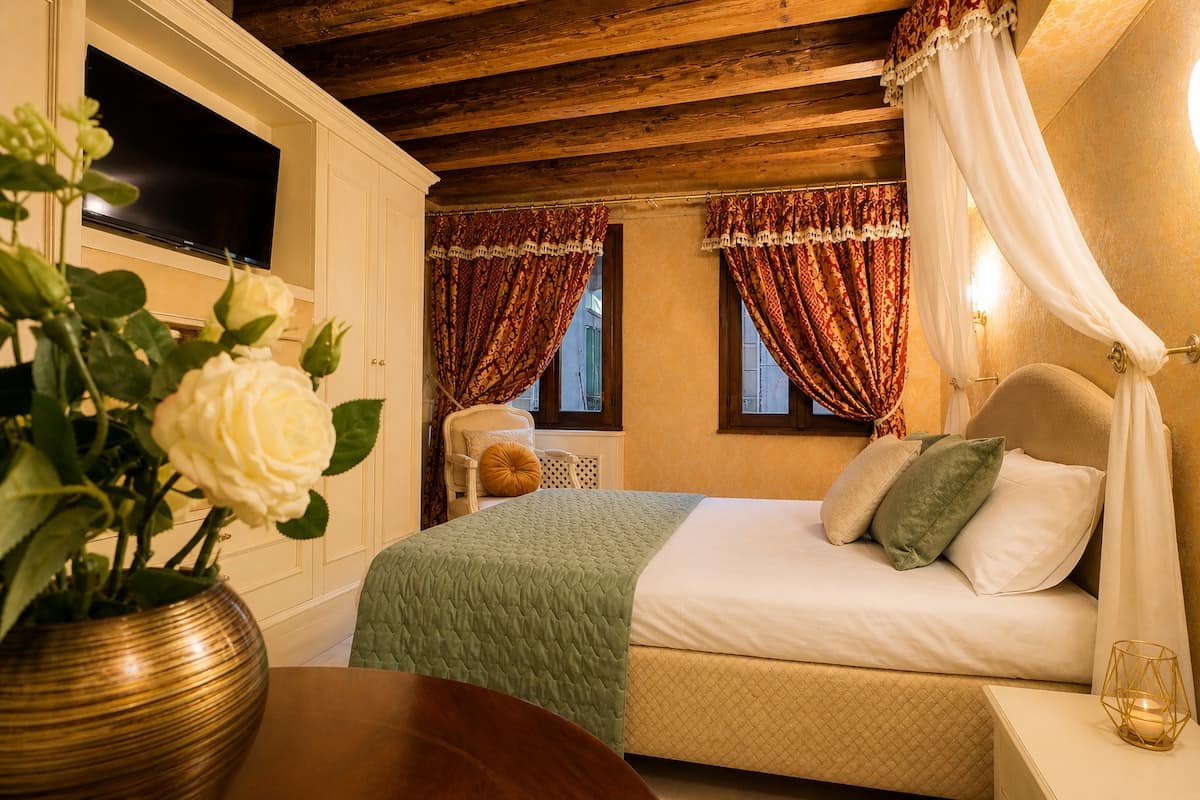
Couple with one infant, 3 nights. Any central flat works. A first-floor flat over a quiet calle is the right brief; you will spend half the trip carrying the baby up and down.
Family of four, two children under 8, 4 nights. Two-bedroom flat in Castello or Cannaregio, central enough to walk to a campo with shops in 5 minutes. Cà Lorenzo is the brief.
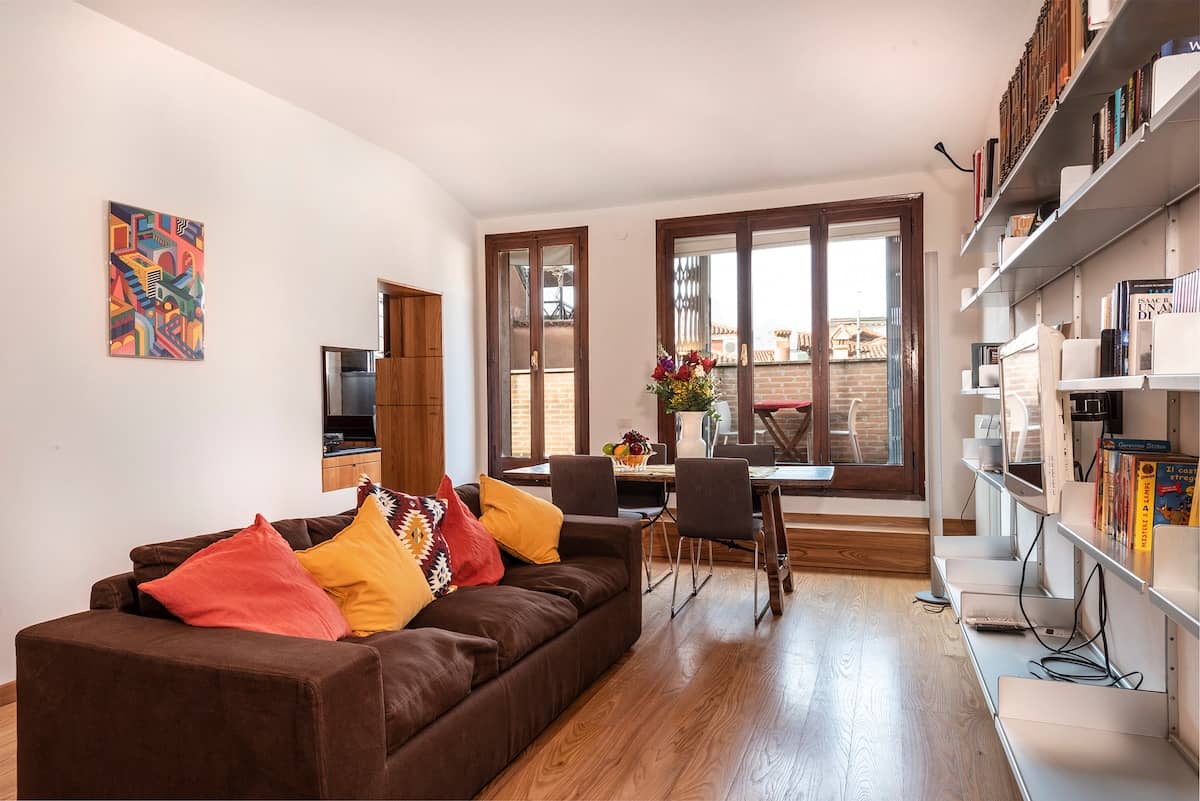
Family of five or six, 5 to 7 nights. Three-bedroom flat in Cannaregio or eastern Castello, ideally with a washing machine and a real kitchen for one or two in-flat dinners. Cà Fortuny or Suite Calle delle Locande fit this brief depending on group size.
A multi-generational trip (grandparents plus parents plus children), 5 nights. Two adjacent flats in the same building rather than one larger flat. Cannaregio has the right stock for this; the Moonlight Venice collection includes several building pairs.
What this means for your trip
Venice with children is not the simpler-than-other-cities trip and not the harder-than-other-cities trip. It is a different trip. The pace is slower, the spectacles work (the boats, the bridges, the masks, the painted houses) and the tedious bits (the long museum, the formal dinner, the 90-minute church) need to be either skipped or carefully booked. The reward is a city where children have unusual amounts of agency: they choose the bridge, the campo, the gelato, the vaporetto stop. Most parents find that the children’s enthusiasm for Venice is greater than they expected and the parents’ is greater than it would have been on a trip without children.
For the wider stay logic, see Where to Stay in Venice. For the daily practicalities, Practical Venice. For the 3-day itinerary in adult shape, 3 Days in Venice. To find a family flat for your dates, the full apartment catalogue sorts by bedrooms and sleeps.
Authoritative external references: Ciao Bambino’s Venice neighbourhood guide for kids corroborates the sestiere recommendations; Italia Kids’ Venice children’s-activity list covers the museum and workshop options; the Comune di Venezia tourist-tax page is the legal source for the children’s exemption.