Dense, small, alive. The market opens at dawn and the basilica of the Frari closes at sunset.
San Polo is Venice’s smallest sestiere by area, anchored by the Rialto Market and Basilica dei Frari. Stay here for a central position with quiet blocks behind it, sixty Tintoretto canvases at San Rocco, and a step to the bridge.
What the sestiere feels like
San Polo is the smallest sestiere by surface area and the most concentrated by stomach. The Rialto Market has stood, in some form, since the 11th century: the fish hall (Pescheria) opens at dawn, the vegetable stalls (Erberia) follow, and both pack up around one. The market is closed Sunday and Monday morning. A walk through it at 07:00 is the closest the city gets to a working day in the 1500s.
Beyond the market, the calli compress. San Polo holds two of the most important spaces in Western art: the Basilica dei Frari, with Titian’s Assumption above the altar and his tomb against the south wall, and the Scuola Grande di San Rocco, sixty Tintoretto canvases under one roof. Both have been in their places since the 1500s.
Stay in San Polo for the central position with a quieter address. The sestiere is two minutes from the Rialto Bridge, but the calli behind the market and around the Frari are residential. Campo San Polo, the largest in the city after the Piazza, fills with children in the evenings and an ice rink in winter.
The landmarks worth the walk
Ponte di Rialto
The first stone bridge across the Grand Canal, completed in 1591. Antonio da Ponte’s single-arch design beat proposals by Michelangelo and Palladio. The shops on the deck have sold goldsmith work since the bridge opened.
Mercato di Rialto
The historic market. Pescheria for fish, Erberia for produce. Mornings only, closed Sunday and Monday morning. The shellfish counter takes orders by name.
Basilica dei Frari
The Basilica dei Frari is the Franciscan basilica, completed 1338, rebuilt 1488. Titian’s Assumption above the high altar, his Pesaro Madonna in the north aisle, his tomb opposite. Quiet most afternoons.
Scuola Grande di San Rocco
Sixty Tintoretto canvases at the Scuola Grande di San Rocco, painted between 1564 and 1588, covering ceiling and walls of three rooms. He won the commission by installing one of the panels in place before submitting it. Mirrors are provided to study the ceiling.
Campo San Polo
The largest campo in Venice after the Piazza. Children play here in the evenings; the cinema in summer sets up a screen; the ice rink in winter.
Where the hosts stop in
All’Arco
Bacaro. Two calli behind the Pescheria. The best cicheti in the city, by a small margin. Standing room only, open lunchtime only, closed Sunday.
Bancogiro
Osteria. Under the arcades along the Grand Canal, with tables on the water. Lunch on the canal, dinner inside. The fish risotto is reliable.
Cantina Do Spade
Osteria. An institution since 1488. Casanova drank here. Plates of cicheti at the bar, full menu at the tables in the back.
Naranzaria
Osteria. Next to Bancogiro under the arcades. A wine bar with a short food menu and a long sunset.
Closing thought
San Polo is the sestiere for the early riser. Cross to the Pescheria at first light, take an espresso and a sgroppino at the bar, watch the boats unload. By 09:00 the city has filled in and the sestiere belongs to the visitors. By 16:00 it belongs to the residents again. For the broader list of sights worth a walk, the twelve places the hosts keep going back to is the companion read.
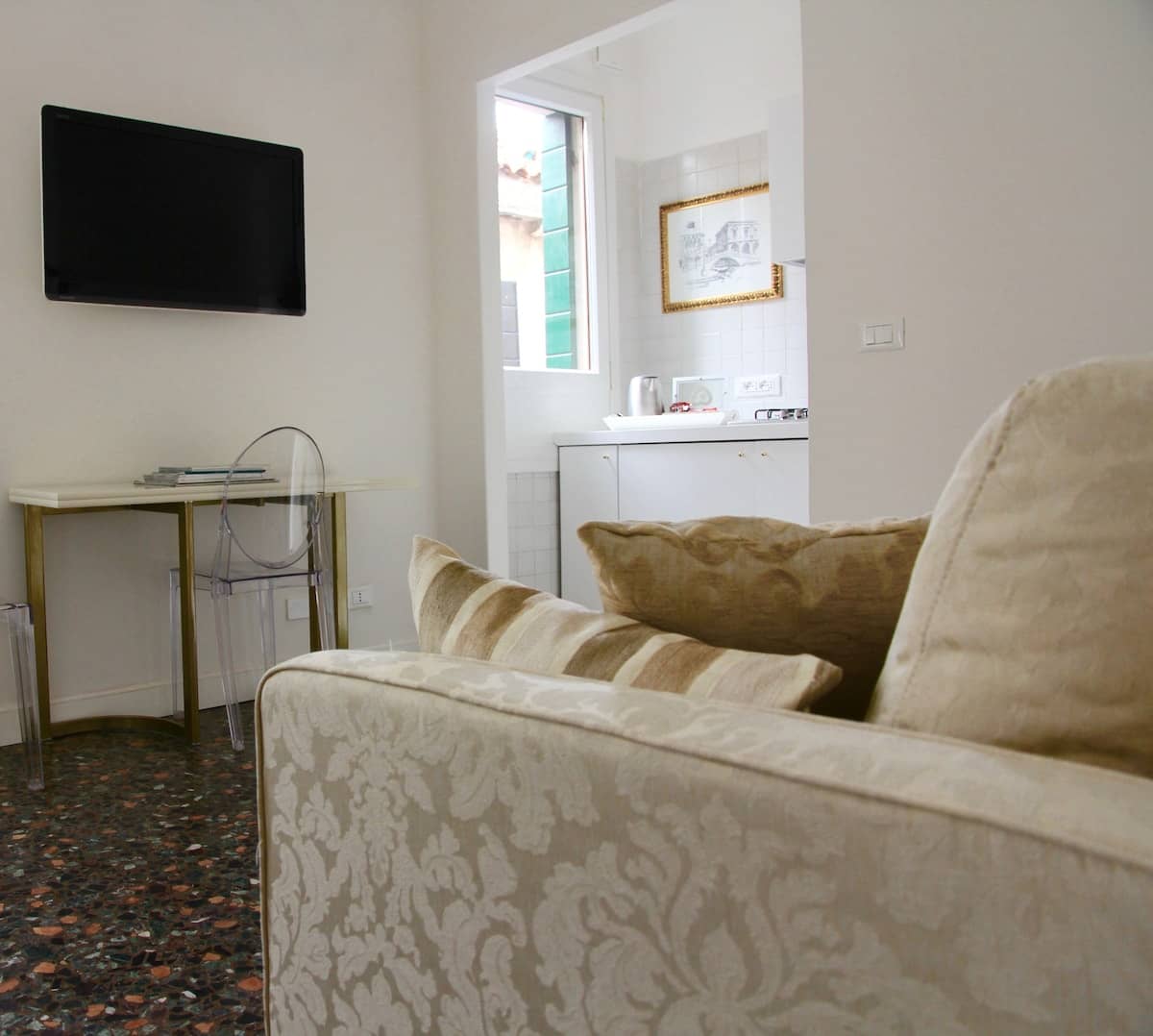
The apartment we host in San Polo is a calle from the market and within hearing distance of the Frari bells. If you have not yet chosen a sestiere, the where to stay in Venice guide walks through the trade-offs.