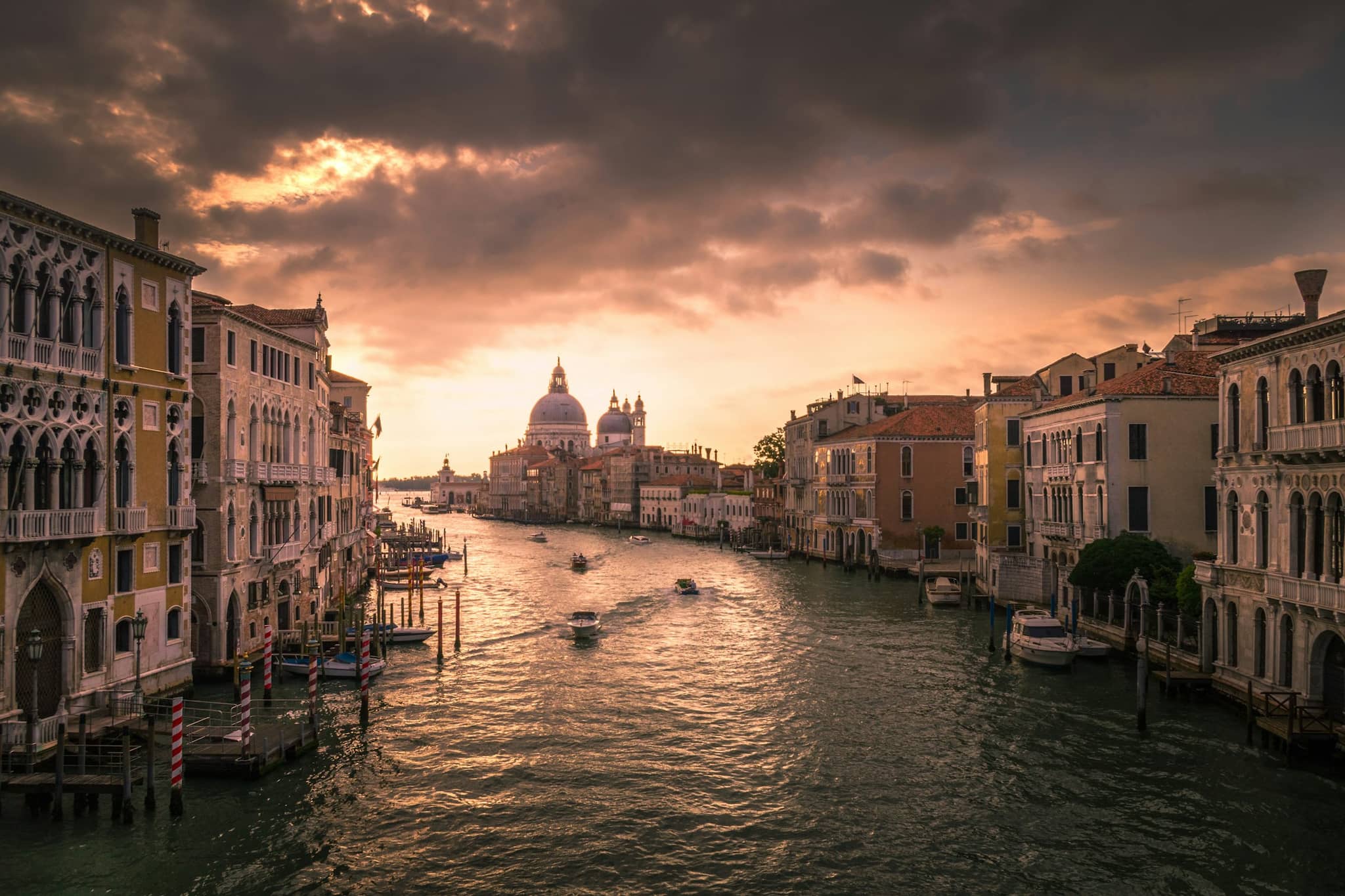
The Venice Biennale is the oldest international art exhibition in the world, founded in 1895 and held every two years across two main venues in the eastern half of Venice. The 2026 edition, the 61st, runs from 9 May to 22 November under the title In Minor Keys, curated by Koyo Kouoh. This guide covers what you need to plan a real visit: the dates, the venues, the tickets, how long it takes, and where to stay close enough to walk in twice.
The short answer
The Biennale Arte 2026 opens Saturday 9 May and closes Sunday 22 November. Tickets are €30 full price, €16 for under-26s. Two main venues, both in Castello: the Giardini and the Arsenale, ten minutes apart on foot. Plan two days for a comfortable first visit. Stay in Castello if you can.
The 2026 theme is In Minor Keys, curated by Cameroonian-born curator Koyo Kouoh (whose appointment was announced in late 2024 and who died unexpectedly in May 2025, with the exhibition completed by her team to her brief). The exhibition assembles 111 invited participants alongside 100 national pavilions, seven of which (Guinea, Equatorial Guinea, Nauru, Qatar, Sierra Leone, Somalia, Vietnam) join the Biennale for the first time.
What the Biennale actually is
The Biennale di Venezia is an institution, not a single event. It runs six departments: art, architecture, cinema, dance, music, and theatre. The two largest, by visitor numbers and international reach, are the Art Biennale and the Architecture Biennale, which alternate years at the same two venues. Even-numbered years are Art; odd-numbered years are Architecture. Cinema, the Film Festival on the Lido, runs every year in early September on its own calendar.
The Art Biennale is the one most travellers think of when they say “the Biennale”. It assembles 100 or so national pavilions, each presenting work by one or more artists chosen by the country’s culture ministry, plus an international group exhibition curated by a single appointed curator. The combined effect, walked over two days, is the closest thing the art world has to a periodic global snapshot.
The Biennale is also the reason Venice has the museum infrastructure it does. The Giardini themselves were laid out in 1807 under Napoleonic urban planning; the first pavilions were built between 1907 and 1933 in distinct national styles. The Arsenale, the old Republic’s shipyard, was opened to the Biennale in 1980 and now hosts a 300-metre-long themed exhibition in the former Corderie. Both venues are worth visiting for the buildings alone, even in a year when the art does not land.
The 2026 edition: In Minor Keys
Koyo Kouoh’s In Minor Keys is conceived as a procession rather than a polemic. The brief, set out by Kouoh in 2024 and 2025 before her death, calls for art read in the emotional and sensory register, not the discursive one. The 111 invited participants include artists working across painting, textile, sound, sculpture, and performance, weighted toward voices from Africa, the Caribbean, and South Asia that historically have been underrepresented in the Biennale’s curated section.
The national pavilions, as always, run independently of the curator’s brief. Seven countries are participating for the first time, bringing the national total to 100. The full list is on the Biennale’s official information page.
The exhibition is dedicated to Kouoh.
The two main venues
Giardini
The Giardini della Biennale, in eastern Castello, is the original Biennale ground. Twenty-nine national pavilions sit along the gravel paths and the lagoon edge, each built in the architectural style of its country at the time of construction. Some are listed monuments in their own right: the Austrian pavilion (Josef Hoffmann, 1934), the Nordic pavilion (Sverre Fehn, 1962), the Brazilian pavilion (Henrique Mindlin, 1964), the Venezuelan pavilion (Carlo Scarpa, 1956).
The Central Pavilion at the heart of the Giardini hosts the curator’s invited exhibition. In 2026, that is In Minor Keys’s opening movement.
Vaporetto: Giardini-Biennale on line 1, or Giardini on lines 5.1/5.2. The walk from San Marco takes 25 minutes along the Riva degli Schiavoni.
Arsenale
The Arsenale, ten minutes west of the Giardini on foot, was the Republic’s industrial shipyard for nine centuries. Twenty-five national pavilions now occupy buildings inside the walled complex, alongside the curator’s main themed exhibition in the Corderie, a 300-metre former rope factory whose long single nave is the most striking exhibition space in Europe.
Vaporetto: Arsenale on line 1. The walk from San Marco takes 15 minutes; the walk between Arsenale and Giardini takes 10.
Pavilions across the city
The remaining 46 national pavilions are hosted in palazzi, former churches, and exhibition spaces scattered across San Marco, San Polo, Cannaregio, and Dorsoduro. The Hong Kong, Ireland, and Iceland pavilions have famously interesting venues; the official Biennale visitor map lists each by address. These collateral pavilions are free to enter (the €30 ticket only covers the two main venues), and walking between them is one of the better ways to see the city during the Biennale months.
When to go
The Biennale runs for almost seven months, so the question is which week.
The opening fortnight (9 to 22 May) is the densest. The vernissage (press preview, 7 to 8 May) is invite-only; the public opening on the 9th draws collectors, curators, and journalists from across the world. The city is full, restaurants book three weeks ahead, the pavilions are best-staffed and the artists themselves often present. If you can stand the crowds, this is when the Biennale feels most alive.
June and early July are the easy months. Weather is reliable, the city is busy but not at peak, the queues at the Giardini entrance run 10 to 15 minutes. We recommend this window to most first-time visitors.
Late July and August are the difficult months. The Biennale is open and the pavilions are intact, but the heat (28 to 33 degrees) and the tourist crowds (cruise season, school holidays) make a full-day visit physically demanding. Plan two short days rather than one long one.
September is excellent. The Film Festival on the Lido (last week of August, first week of September) draws a different crowd to a different island; the Biennale itself stays manageable. The autumn light is the best part.
The closing weeks (mid-October to 22 November) are the second-best window after the opening. Cooler weather, thinner crowds, the same exhibition, lower hotel prices. Acqua alta becomes a possibility in November but the MOSE barrier system, active since 2020, has effectively eliminated the catastrophic flooding events that used to threaten the closing weeks.
For the seasonal angle on Venice itself, see Best Time to Visit Venice.
How long you need
Three hours per main venue is the working minimum. A comfortable first visit takes two full days: one for the Giardini (29 pavilions plus the Central Pavilion’s first half), one for the Arsenale (25 pavilions plus the Corderie’s main exhibition). Add a third day for the collateral pavilions scattered across the city, which are the more adventurous discovery and which require a bit of map-reading to find.
A single-day visit is possible if you start at 11:00 sharp, eat a quick lunch at the Giardini café, and accept that you will skip half the national pavilions. Most people who try this regret it by 16:00.
The tickets are valid for one day of entry; a multi-day pass and combined Art-plus-Architecture packages are listed on the official site.
Tickets and practicalities
Single-access tickets: €30 full, €20 reduced (over-65, Venice residents), €16 (students, under 26). Children under 6 enter free; under 14 enter free when accompanied by an adult. Tickets are valid for both main venues for the day of entry, with re-entry permitted.
The Giardini and the Arsenale each have a single main entrance and a security check. Bags larger than a small backpack are not permitted and have to be left at the cloakroom (free). Photography without flash is allowed; tripods require permission.
Book in advance for the May opening, weekends in June and July, and the November closing weeks; walk up the rest of the time. Tickets at labiennale.org.
The two venues are 10 minutes apart on foot through Castello. The vaporetto saves no time between them and is rarely worth the wait.
Accessibility: both venues offer courtesy electric-vehicle transport for visitors with reduced mobility, plus wheelchairs, walkers, and strollers on a first-come basis at the entrance. Details on the Biennale’s Prepare Your Visit page.
Where to stay during the Biennale
The right answer is Castello. Both main venues are in Castello, the eastern, residential half of Venice, and a 15-minute walk to the Giardini from a Castello apartment beats any vaporetto routing from San Marco or Cannaregio.
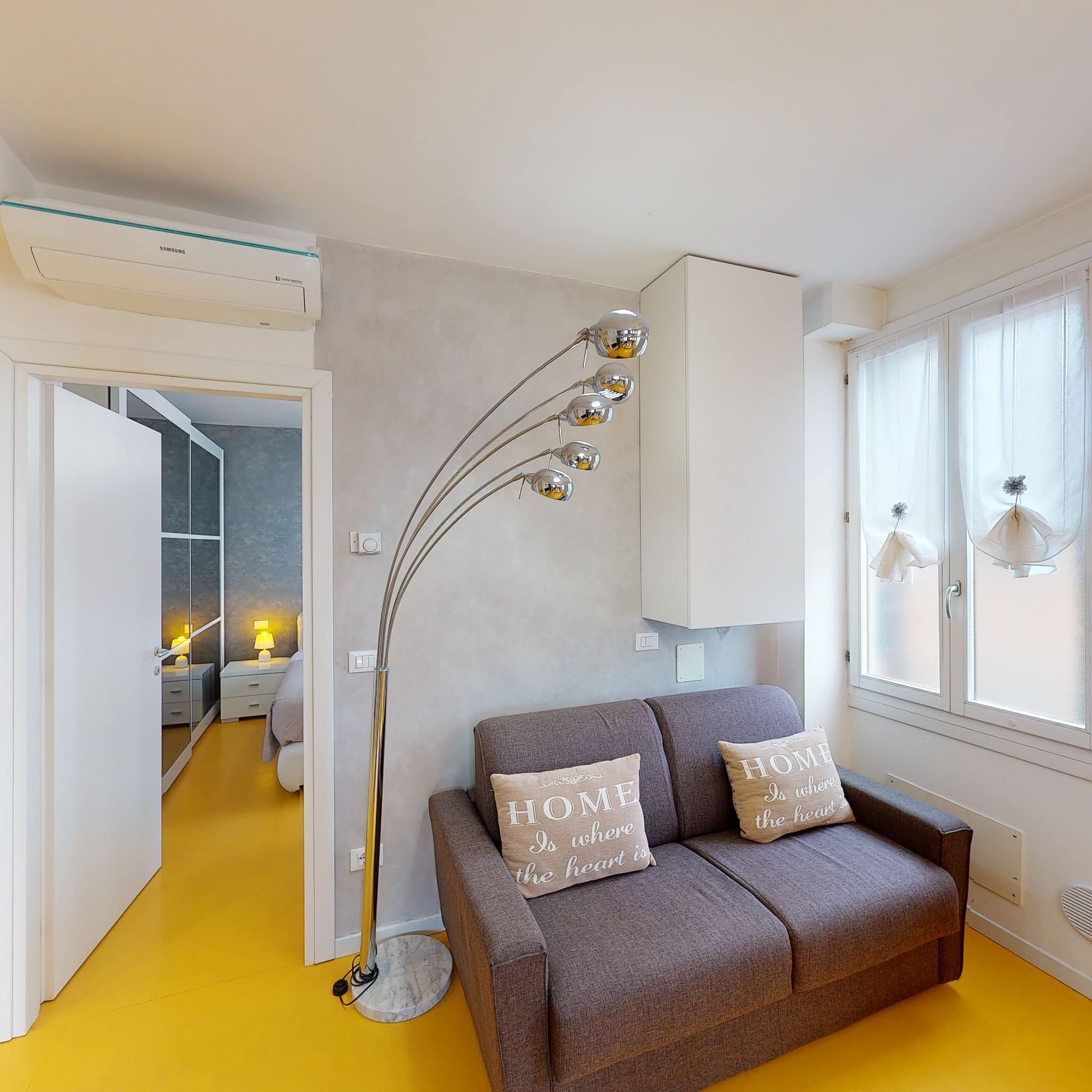
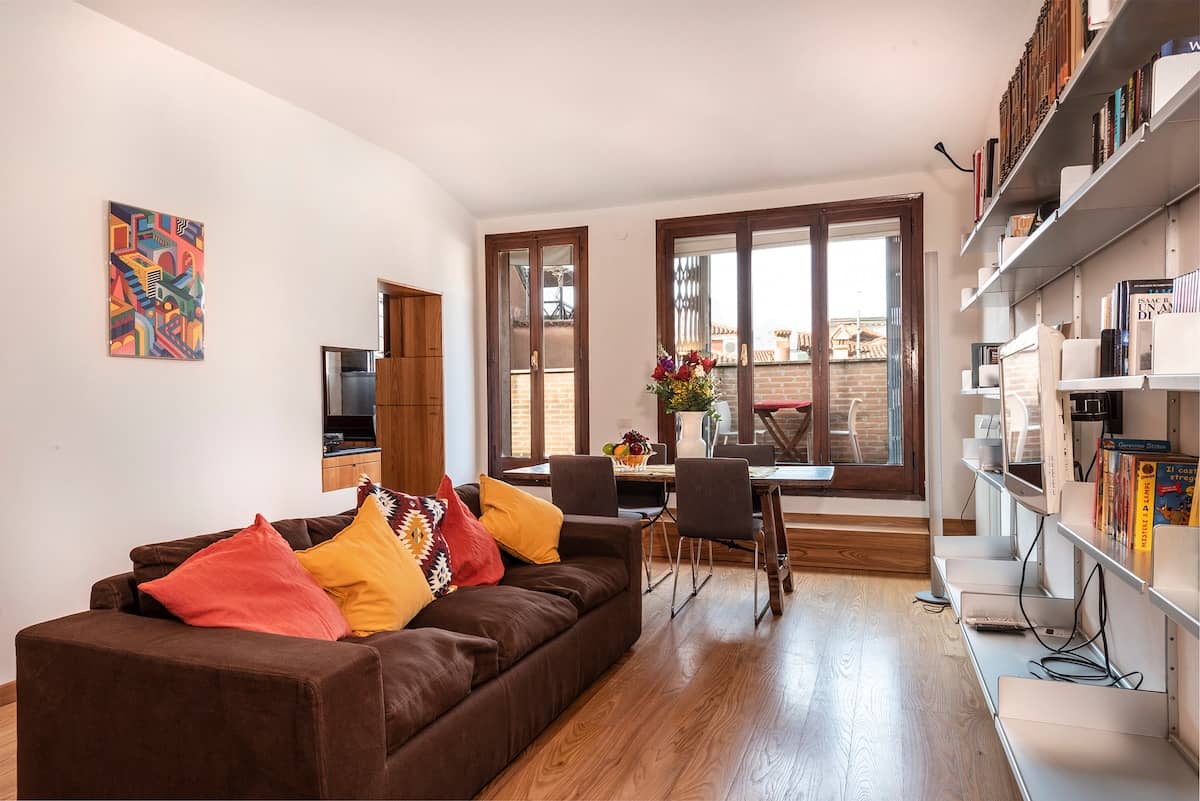
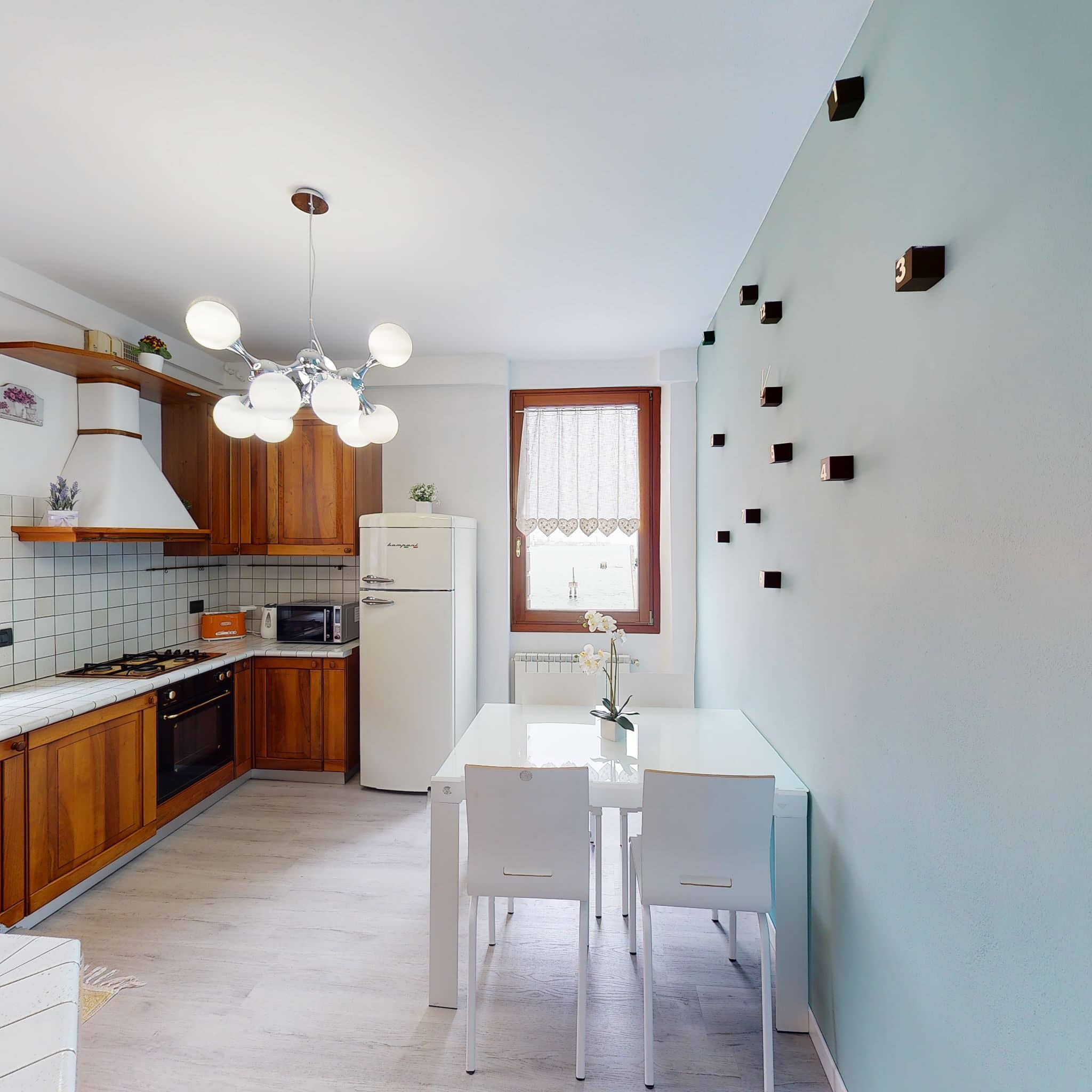
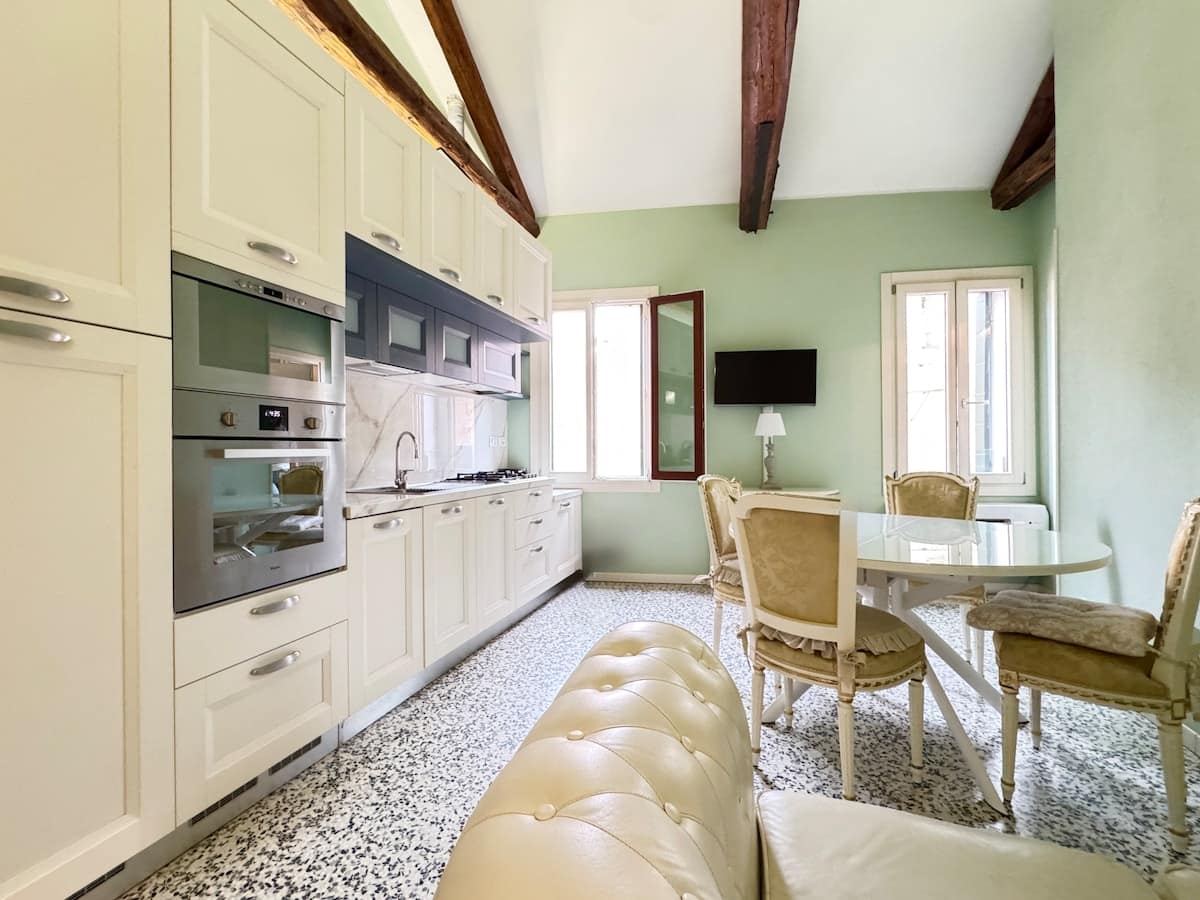
The eastern half of Castello, between the Arsenale and the Giardini themselves, is the closest you can sleep to the Biennale. Celestia Panoramic is two vaporetto stops past the Giardini at Celestia, with a third-floor lagoon-facing terrace and direct line-1 access. Cà Monica and Cà Donà sit in the same residential cluster, ten minutes from the Giardini gate. For a more central Castello base near Santa Maria Formosa, with a 20-minute walk to the Giardini and immediate access to bacari, Cà Lorenzo is the right pick.
San Marco apartments work for the Biennale (Vaporetto 1 from San Zaccaria reaches Giardini in 10 minutes), but the morning queue at San Zaccaria during high season is the kind of friction that compounds over a three-day visit. If the only available apartment is in San Marco or San Polo, optimise for walking, not waiting: take the slow walk along the Riva degli Schiavoni in the morning, let the museum tire you out, vaporetto home in the evening. For the sestiere-by-sestiere logic, see Where to Stay in Venice.
The honest recommendation
If you have not been to the Biennale before, plan two days, stay in Castello, go in mid-June or late September, and read nothing about the pavilions in advance. The point of the exhibition, against a hundred competing art fairs in better-air-conditioned cities, is the slow walking encounter: through the Giardini’s century-old pavilions, into the Corderie’s long single nave, across the city to a Croatian palazzo or an Irish chapel. A pre-formed opinion is the wrong tool for that.
Bring water. Wear walking shoes. Eat early or eat late, never at the venues themselves. Book one of the harder-to-reach restaurants in eastern Castello (Corte Sconta if you can, but only with a reservation made weeks in advance) for one night to anchor the visit to a place outside the exhibition.
The next deep read is the seasonal guide for the weather context, and the practical pillar for vaporetto, water, and acqua alta. To check availability on the dates the Biennale matters to you, the full apartment list is here.
Authoritative external reference: the Biennale di Venezia Wikipedia entry covers the 130-year institutional history; the official 2026 site holds the current schedule, the participants, and the visitor information that this article summarises.